
Discover Taiwan’s Vibrant Capital
Taipei, the capital of Taiwan, is a fascinating city where modern urban development lie comfortably alongside centuries of cultural tradition. Its skyline is defined by landmarks such as Taipei 101, while historic temples, traditional neighbourhoods and lively night markets offer a very different perspective on the city. Taipei is also well known for its food culture, from neighbourhood eateries serving traditional Taiwanese dishes to the many street food stalls found throughout its night markets.
Getting around is relatively straightforward thanks to an efficient public transportation network, and the city has a reputation for being welcoming and comfortable for visitors to explore. Whether discovering the collections at the National Palace Museum, sampling local favourites such as beef noodle soup, or spending an evening browsing Shilin or Raohe Night Market, Taipei offers a varied introduction to Taiwan’s history, culture and contemporary city life.
Top Places to See and Things to Do
Taipei Xia-Hai City God Temple
Located on Section 1 of Dihua Street in Taipei’s historic Dadaocheng neighbourhood, the Taipei Xia-Hai City God Temple is a small but fascinating place to visit. Although modest in size, it is an important centre of local religious life and is particularly well known for Yue Lao, the traditional Chinese deity associated with love and matchmaking. Visitors, including many couples and those hoping to find a partner, come to offer prayers and seek blessings for their relationships. The temple provides an interesting glimpse into Taiwanese religious customs and traditions.
There is plenty to explore nearby. Dihua Street is one of Taipei’s oldest commercial streets, known for its traditional shopfronts, tea merchants, dried goods and historic architecture. Just steps away, Yongle Fabric Market is worth a look, while the Dadaocheng Wharf offers a pleasant riverside setting. If you enjoy sampling local food, Ningxia Night Marketis also within walking distance, making it easy to combine the temple with an enjoyable afternoon exploring this historic part of Taipei.
Taipei 101
Standing 508 metres above Taiwan’s capital, Taipei 101 is one of the city’s most recognizable landmarks and an impressive example of modern architecture. When it opened in 2004, it became the world’s tallest building, retaining that distinction until 2010. Its design was inspired by a bamboo stalk, with each tier representing strength, resilience and growth, traditional qualities associated with bamboo in Asian culture. The result is a distinctive structure that combines contemporary engineering with traditional design influences.
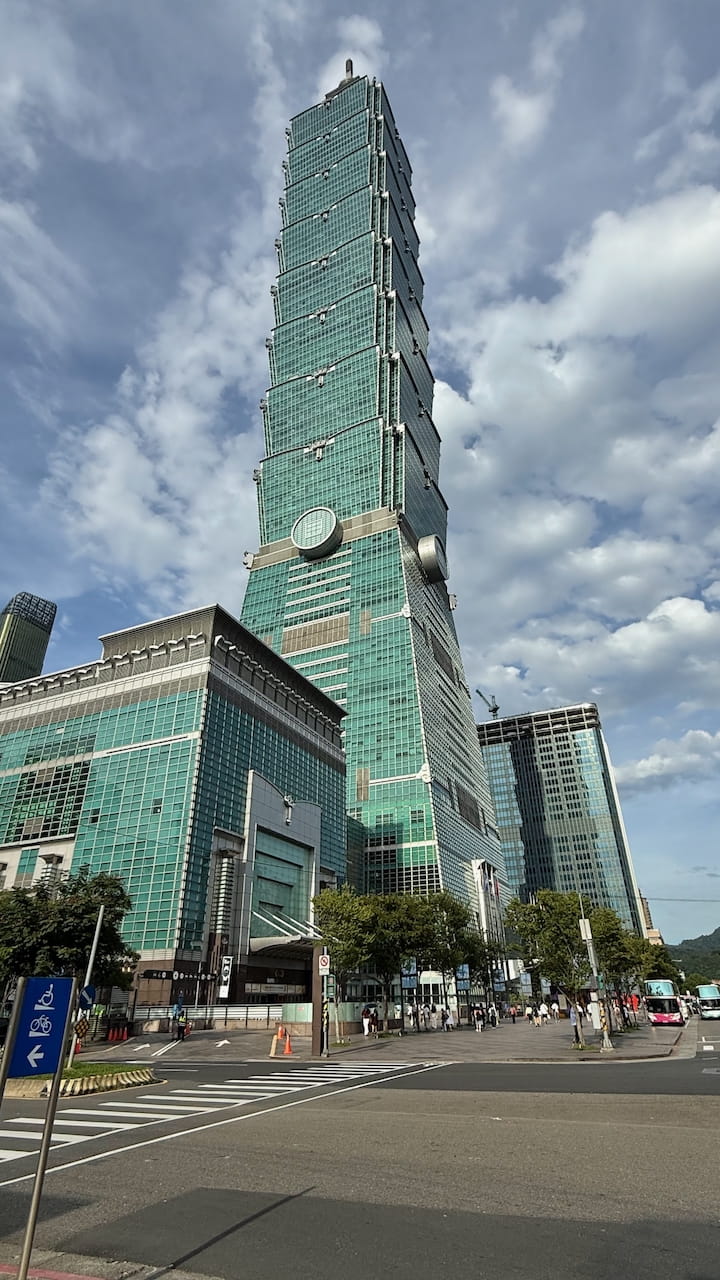
What makes Taipei 101 particularly interesting is the engineering behind its construction. Taiwan is regularly exposed to typhoons and earthquakes, making structural stability an important consideration. To help manage these forces, the building houses a 660-tonne, gold-coloured tuned mass damper suspended between the 87th and 92nd floors. This enormous steel sphere moves in response to the building’s motion, helping counteract swaying caused by strong winds and seismic activity. Visitors can see it for themselves, making it an unusual and worthwhile part of the experience.
For visitors, the highlight is generally the journey to the observatory on the 89th floor. The high-speed elevators make the ascent in approximately 37 seconds, taking you to an indoor viewing area with impressive 360-degree views across Taipei and the surrounding mountains. On a clear day, the elevated perspective provides a particularly good appreciation of the city’s size and setting.
At the base of the tower, Taipei 101’s multi-level shopping mall offers a selection of international luxury brands, specialty shops, cafés and restaurants. Whether you visit primarily for the observation deck, the architecture or the shopping and dining, Taipei 101 is well worth including when exploring Taiwan’s capital. It offers an interesting combination of modern design, engineering and city views.
Elephant Mountain
Located close to Taipei’s Xinyi District, Elephant Mountain (Xiangshan) is one of the best-known places to enjoy an elevated view of the city, with Taipei 101 providing a particularly impressive focal point. The mountain takes its name from its distinctive shape, which is said to resemble an elephant. Despite its natural setting, it is easy to reach from the city, with Xiangshan MRT Station providing convenient access to the trailhead.
The main route follows a series of stone steps through subtropical vegetation, including mature trees and dense greenery. Although the hike is relatively short, the steady incline and numerous steps make it more demanding than its distance might suggest. Depending on your pace and how often you stop, allow around 20 to 30 minutes to reach some of the main viewpoints. Along the way, several lookout areas provide opportunities to pause, take photographs and enjoy views across Taipei. The large sandstone outcrops commonly known as the Six Giant Rocks are among the most popular stopping points, offering a particularly good vantage point towards Taipei 101 and the surrounding skyline.
Late afternoon is a good time to make the climb, allowing you to enjoy the city in daylight before watching the lights gradually appear as evening approaches. This is also one of the busier periods on the trail, particularly around the main viewing areas, so some patience may be needed when finding a suitable spot for photographs.
For those who would prefer to walk a little farther, the trail connects with routes along the Four Beasts Mountain area, providing additional opportunities to explore the surrounding hills and forest paths. Whether you make the short climb to the main viewpoints or spend longer exploring the trails, Elephant Mountain offers a rewarding change of perspective from Taipei’s busy streets and a memorable view of the city.
Chiang Kai-shek Memorial Hall
Located in the heart of Taipei, Chiang Kai-shek Memorial Hall is one of Taiwan’s most prominent landmarks and an important place to learn about the island’s modern history. Completed in 1980, the impressive white structure is topped by a distinctive deep-blue octagonal roof, with architectural influences drawn from traditional Chinese design. Its white marble exterior and blue roof also reflect the colours of Taiwan’s national flag.
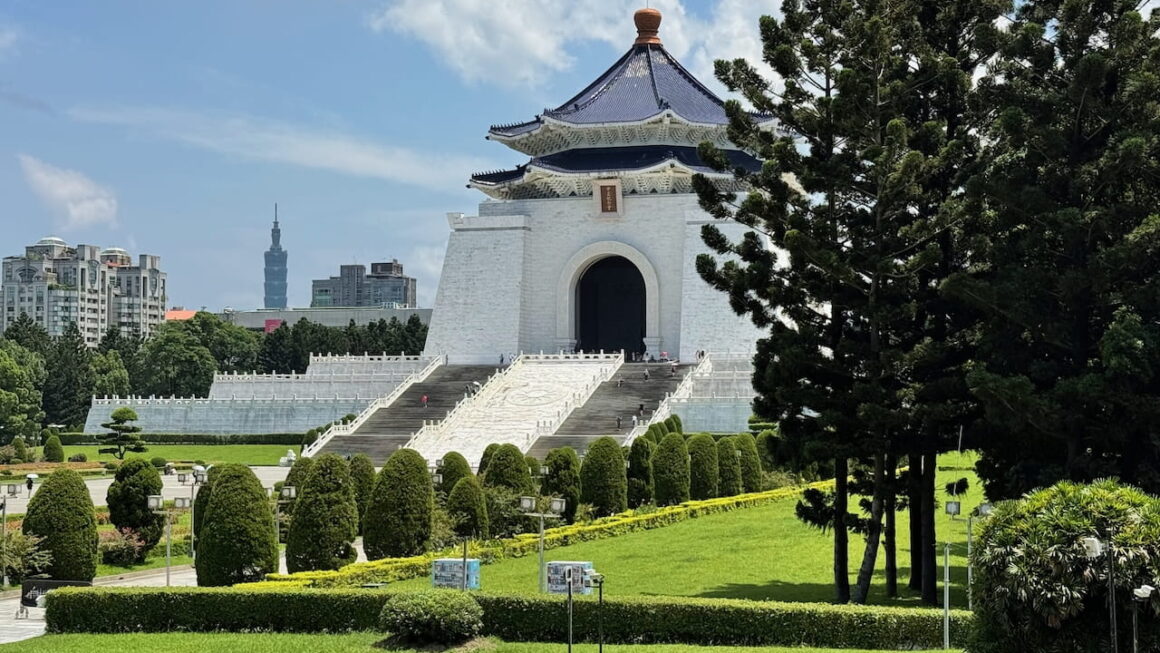
A broad staircase of 89 white marble steps leads to the main hall, with the number representing Chiang Kai-shek’s age at the time of his death. Inside, a large bronze statue of the former leader sits facing Liberty Square. The expansive plaza is framed by two equally striking cultural buildings, the National Theater and National Concert Hall, both worth appreciating as part of a visit to the complex.
One of the more distinctive features of the memorial is the Changing of the Guard ceremony, which takes place hourly. Visitors gather inside the main hall to watch members of Taiwan’s armed forces perform a carefully coordinated routine. The ceremony is a popular attraction and provides an interesting glimpse into the formal traditions associated with the monument.
The exhibition areas within the memorial provide further insight into Chiang Kai-shek’s life, political career and influence on Taiwan’s development. Photographs, personal belongings and historical documents help explain an important and sometimes complex period in the island’s history.
The surrounding grounds are equally enjoyable to explore. Liberty Square and the landscaped gardens offer open spaces, traditional design features, ponds and shaded walkways that provide a welcome contrast to Taipei’s busy streets. The complex is also used for public gatherings, cultural performances and other events throughout the year.
We would allow time to explore both the memorial and its surrounding grounds rather than simply visiting the main hall. It is an opportunity to appreciate the architecture, observe an established local tradition and gain a better understanding of Taiwan’s history while spending time in one of Taipei’s most recognizable public spaces.
Exploring the Grounds of Chiang Kai-shek Memorial Hall
Covering more than 250,000 square metres, the grounds surrounding Chiang Kai-shek Memorial Hall offer considerably more than an impressive setting for the memorial itself. They form an important cultural and recreational space in central Taipei, where visitors can experience the city’s architectural heritage alongside its everyday life. Most enter through the prominent five-arched Liberty Square Gate, which opens onto a large, expansive plaza frequently used for concerts, cultural events, art installations and public gatherings.
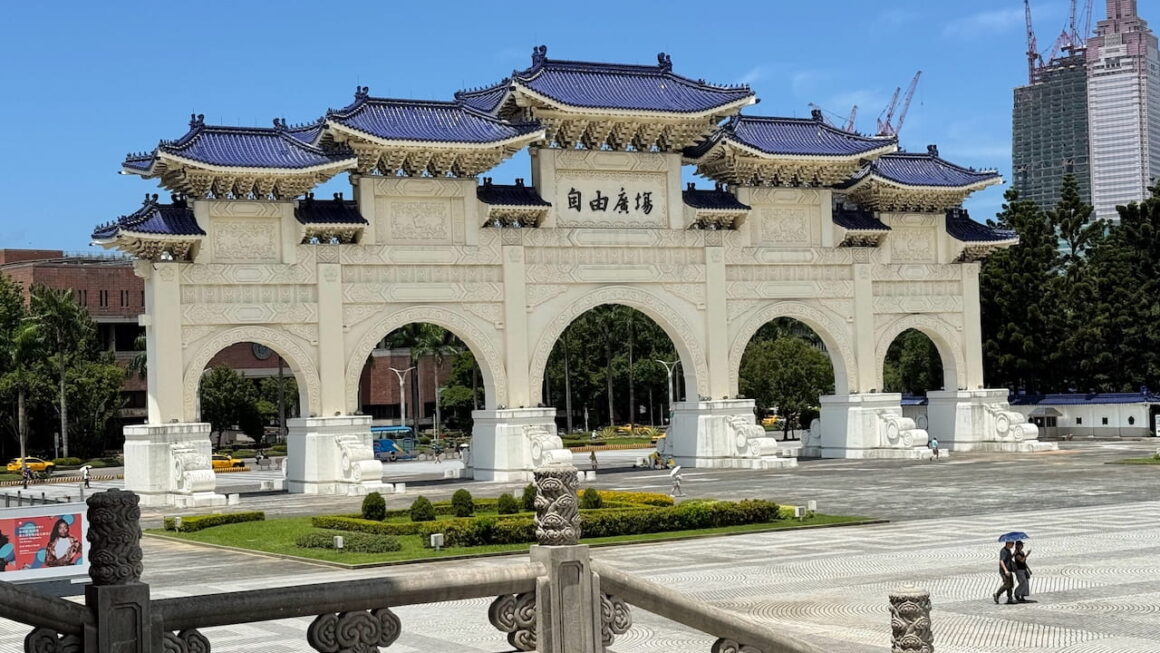
On either side of the square stand two impressive examples of traditional Chinese palace-style architecture: the National Theater and the National Concert Hall.
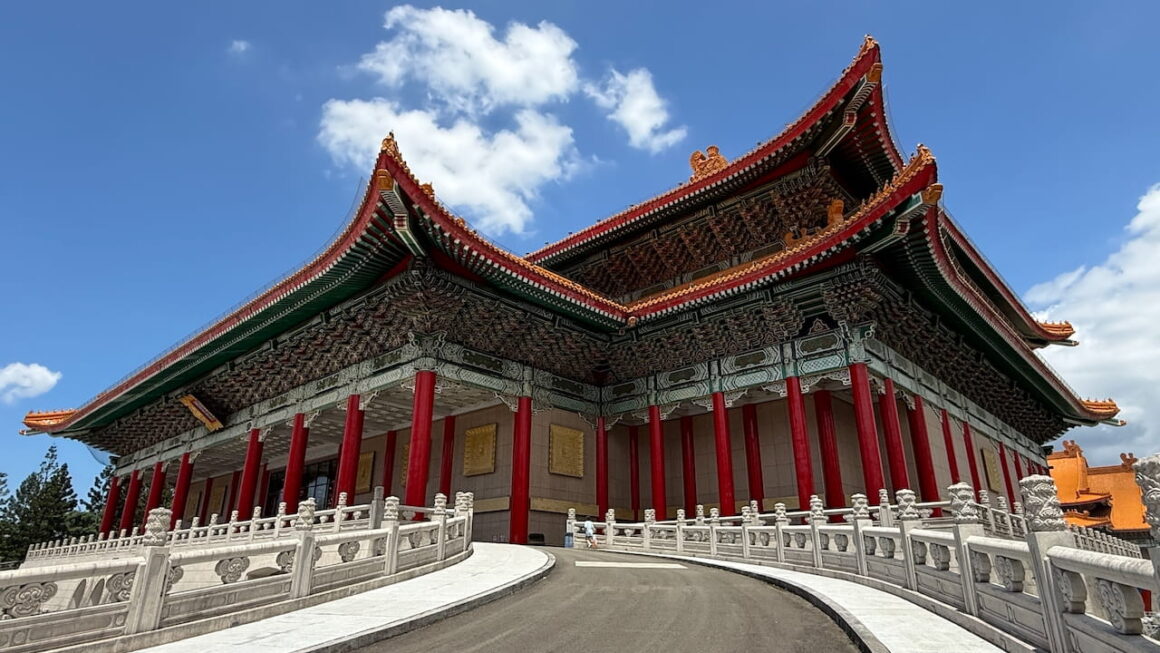
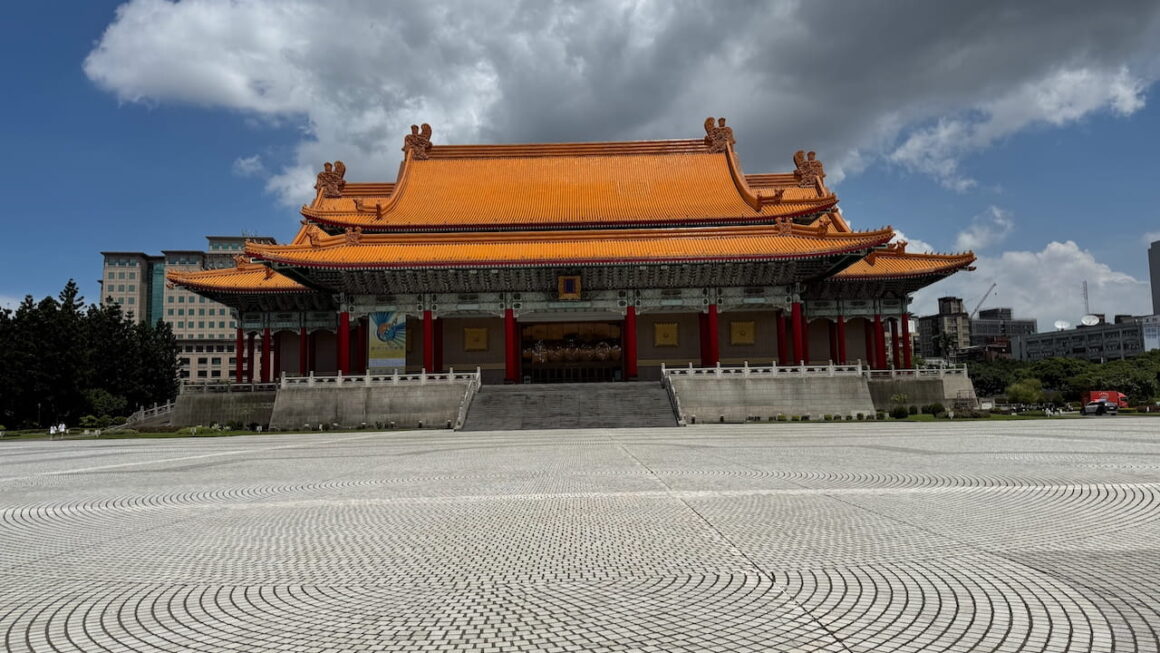
Their sweeping golden-tiled roofs, colourful detailing and distinctive vermilion pillars make them architectural highlights in their own right. Both venues host a varied programme of performances, ranging from classical music and international productions to traditional Taiwanese opera. Even without attending a performance, it is worth taking time to appreciate the buildings and explore their public areas, which may include cafés, shops and cultural displays.
Beyond the open plaza, the grounds become noticeably quieter. Landscaped gardens, tree-lined pathways and traditional pavilions provide a more relaxed setting for a walk or a break from the pace of the city. Ponds, bridges and carefully maintained greenery add to the atmosphere, while seasonal flowering trees bring changes in colour throughout the year. The gardens are also a popular gathering place for residents. Visiting in the morning, you may see people practising tai chi, dancing or participating in other forms of exercise beneath the shade of mature trees.
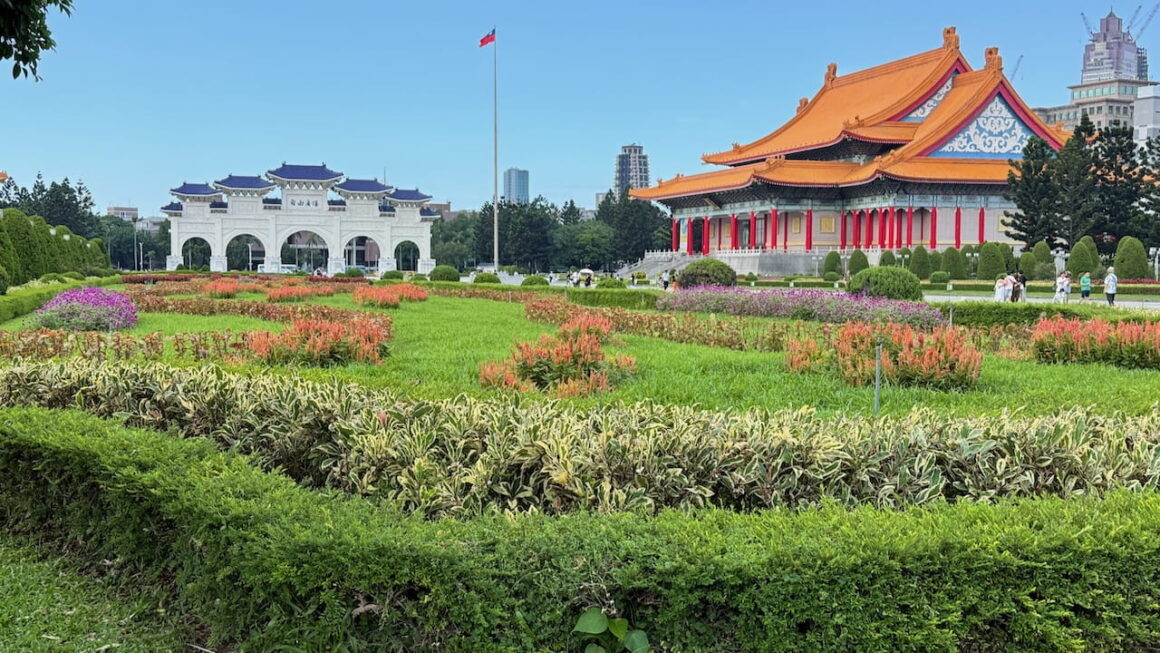
We found this contrast between the formal scale of the memorial complex and the relaxed atmosphere of its surrounding grounds particularly interesting. It is not simply a place to see an important landmark; it also offers an opportunity to observe how public spaces are used in everyday Taipei life. Allowing some extra time to explore the wider complex gives visitors a more complete experience than a brief visit to the memorial building alone.
National Dr. Sun Yat-sen Memorial Hall
Located in Taipei’s Xinyi District, a short distance west of Taipei 101, the National Dr. Sun Yat-sen Memorial Hall commemorates Dr. Sun Yat-sen, widely regarded as the founding father of the Republic of China. Completed in 1972, the building features traditional Chinese architectural influences, including its distinctive yellow-tiled roof, and stands within the landscaped surroundings of Zhongshan Park.
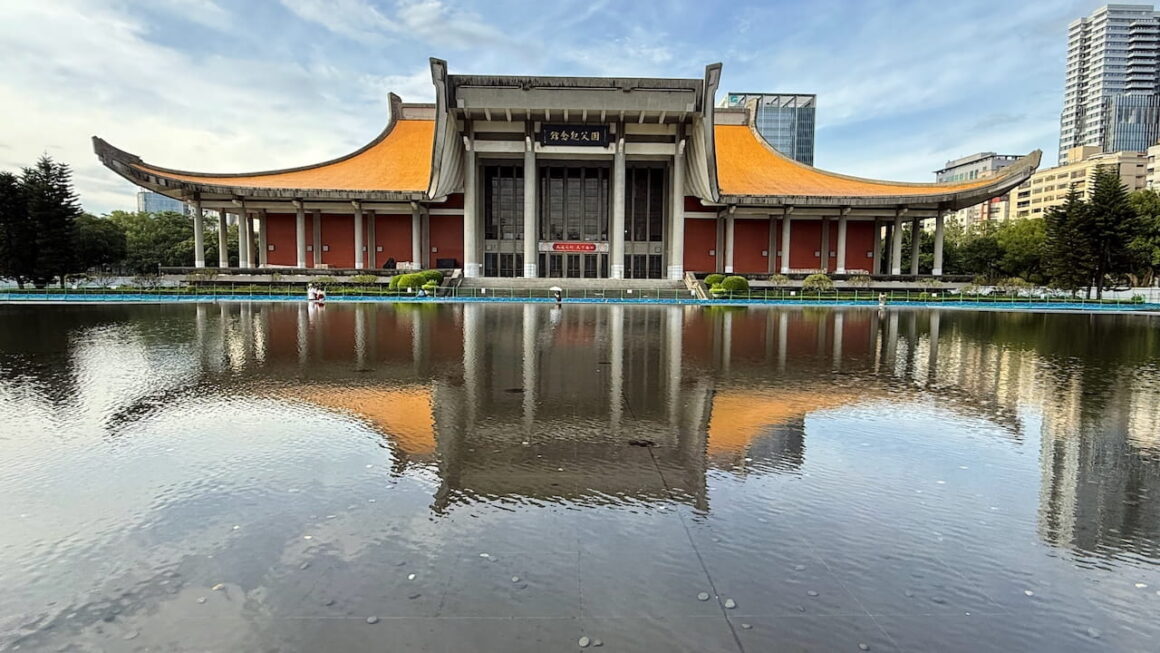
Inside, visitors can learn about Dr. Sun’s life, his political ideas and his role in the events leading to the 1911 Revolution, which brought an end to China’s imperial system. Historical displays and exhibits provide useful background for understanding his influence on modern Chinese and Taiwanese history.
The memorial hall also serves as a venue for cultural and educational activities, with exhibition spaces, a library, lecture facilities and a large auditorium used for performances and major events. Its programme can include art exhibitions, concerts and other public events, giving visitors reasons to return beyond the historical displays.
The surrounding Zhongshan Park offers a pleasant place to walk and take a break from the busier streets of Xinyi District. Its open spaces and landscaped gardens provide views towards the surrounding city, with Taipei 101 adding a familiar landmark to the skyline. Given its location, the memorial hall is easy to combine with a visit to Taipei 101 and the nearby shopping and dining areas.
For visitors interested in Taiwan’s history, the memorial hall provides useful historical context, while its setting offers a quieter contrast to the activity of the surrounding commercial district.
228 Peace Memorial Park
Located in Taipei’s central Zhongzheng District, near the Presidential Office Building, 228 Peace Memorial Park is both an important historical site and a popular public green space. Originally established in 1900 as Taipei New Park, it was renamed in 1996 in memory of the victims of the February 28 Incident of 1947, a significant and tragic event in Taiwan’s modern history. The incident and the subsequent period of political repression had a lasting impact on Taiwanese society, making the park an important place for remembrance and reflection.
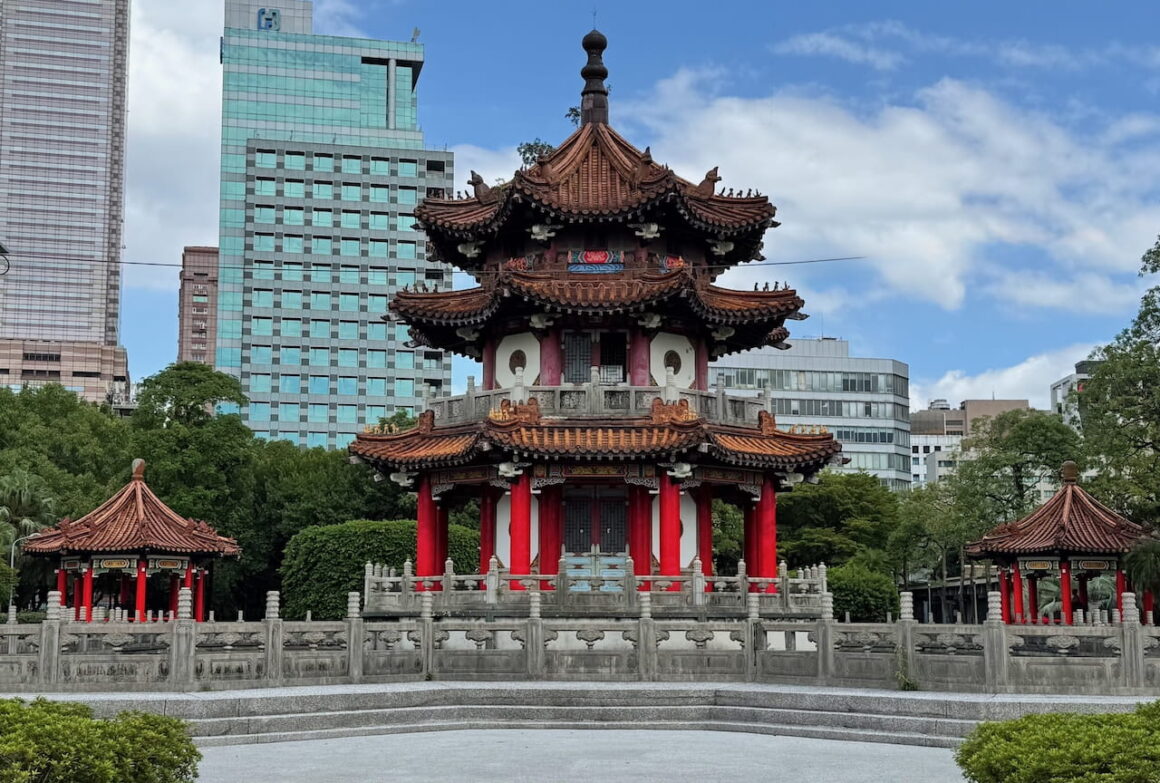
At the centre of the park stands the 228 Memorial Monument, which commemorates those who lost their lives. Visitors can also explore the Taipei 228 Memorial Museum, where exhibitions provide further insight into the events of 1947 and their historical significance. Nearby, the National Taiwan Museum offers another opportunity to learn about the island’s history, culture and natural heritage.
Away from the memorial sites, the park has a more relaxed atmosphere. Shaded pathways, traditional pavilions, ponds and landscaped gardens provide space to walk or take a break from the surrounding city streets. It is also used by local residents for everyday activities, including morning exercise and tai chi.
We think the combination of historical importance and everyday local life makes 228 Peace Memorial Park a worthwhile stop when exploring central Taipei. It offers visitors an opportunity to learn more about an important part of Taiwan’s history while also seeing how the grounds continue to serve the surrounding community.
Dalongdong Baoan Temple
Located in Taipei’s historic Datong District, Dalongdong Baoan Temple is an important place of worship with a history dating back to 1742. It was originally established by settlers from Tong’an in Fujian Province, China, who built a modest wooden shrine dedicated to Baosheng Dadi, a Taoist deity associated with medicine and health. The temple was expanded and rebuilt over the following decades, eventually becoming the larger complex visitors see today.
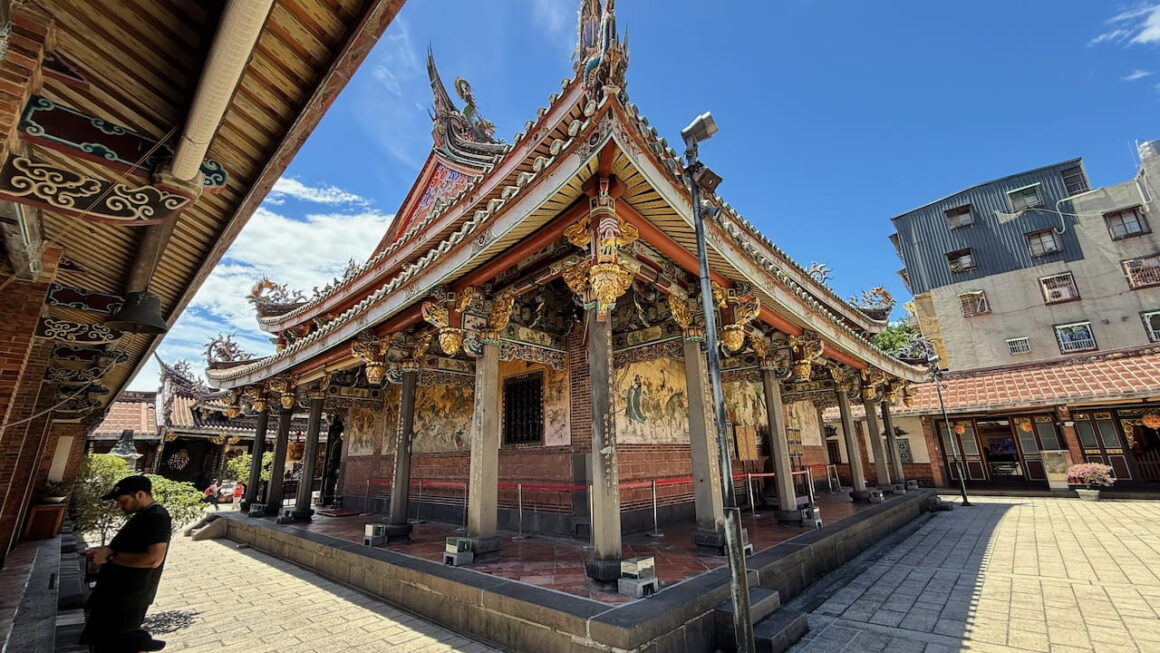
One of the first things you notice when visiting is the amount of detail throughout the temple. The traditional roofs are decorated with colourful ceramic figures, while carved stone pillars, wooden decorations and painted murals add character to the buildings. Inside, the main halls contain altars and religious offerings, and the scent of incense is a reminder that this remains an active place of worship rather than simply a historic attraction.
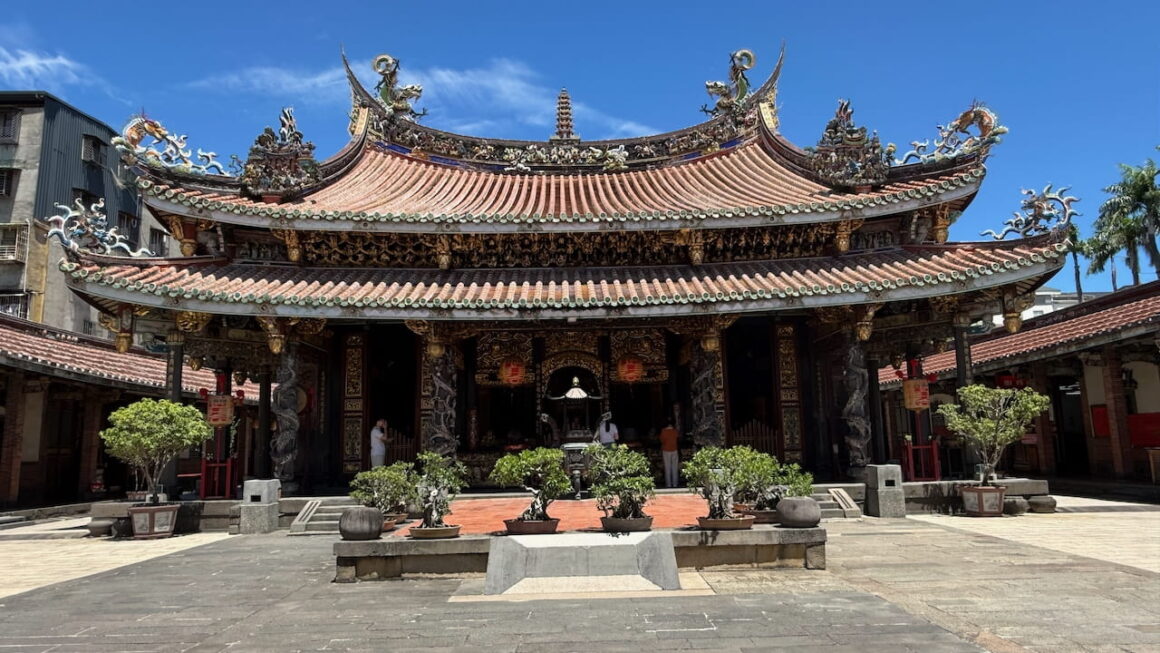
The temple underwent an extensive restoration programme during the 1990s, with considerable attention given to preserving its original features and traditional building methods. The work received recognition through a UNESCO Asia-Pacific Heritage Award for Cultural Heritage Conservation, highlighting the importance of maintaining the temple’s historical and cultural character.
Beyond its history and architecture, Baoan Temple continues to play an important role in the local community. Each year, the Baosheng Cultural Festival brings additional activity to the temple, with traditional performances, folk arts and religious processions celebrating the deity and local customs. The festival offers visitors an opportunity to see some of Taiwan’s religious and cultural traditions being practised today.
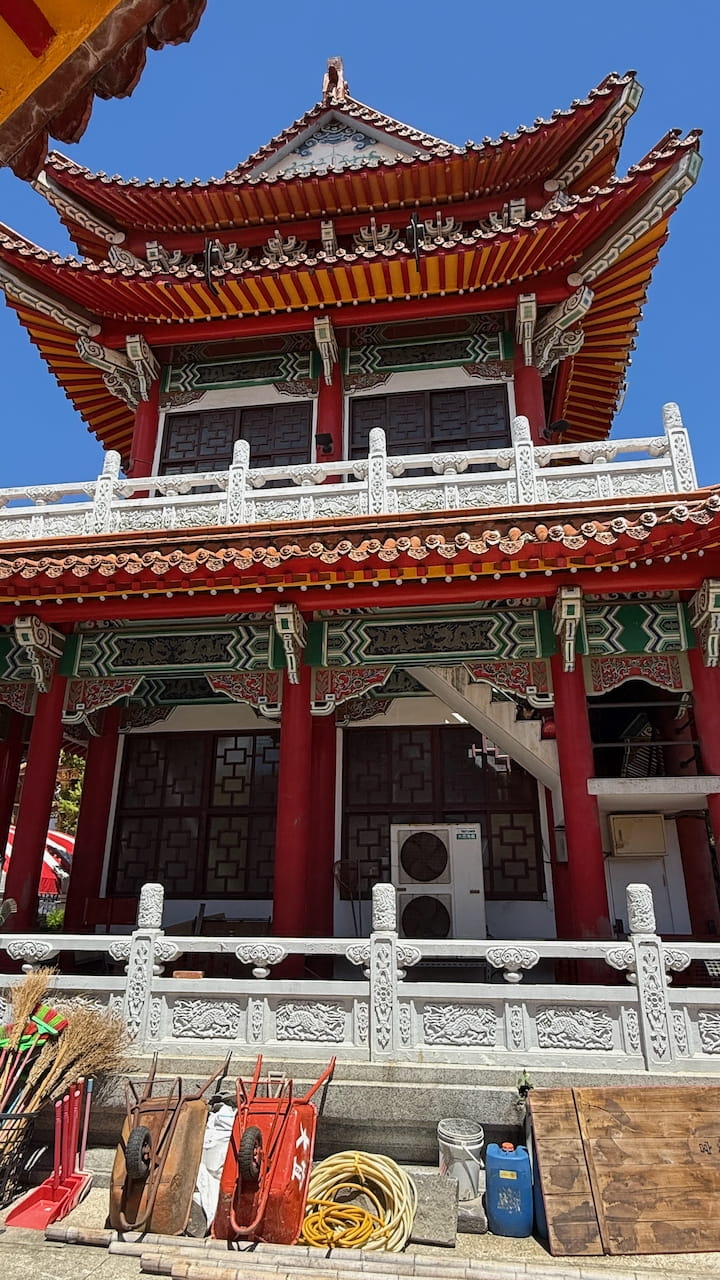
Located directly across from Taipei Confucius Temple, Baoan Temple is easy to combine with a visit to another of the city’s important historical and cultural sites. We would recommend allowing time to explore both temples and their surrounding neighbourhood. Together, they provide an interesting perspective on Taiwan’s religious traditions, history and cultural heritage.
Longshan Temple
Established in 1738 in Taipei’s historic Wanhua District, Longshan Temple is one of the city’s oldest and most significant places of worship. Over the centuries, it has endured earthquakes, fires and wartime damage, undergone several restorations while continuing to serve the local community. The temple brings together Buddhist, Taoist and traditional folk beliefs, reflecting the diverse spiritual practices that remain an important part of Taiwanese culture.
The temple’s architecture is one of its main attractions. Inside the courtyard and main halls, visitors can appreciate intricately carved stone dragon pillars, ornate altars and sweeping rooflines decorated with colourful jiannian porcelain figures. The craftsmanship and decorative detail are worth taking time to appreciate, particularly when viewed up close.
Beyond its architecture, Longshan Temple remains an active place of worship rather than simply a historic attraction. The sound of chanting, the fragrance of incense and the presence of flower offerings create an atmosphere that feels very much part of everyday religious life. Visitors may also observe worshippers following traditional practices, including tossing wooden jiaobei (moon blocks) to seek guidance or drawing bamboo fortune sticks for answers to personal questions.
We find that places such as Longshan Temple offer an especially valuable perspective on a destination because they reveal something of the culture and traditions that continue beyond its major landmarks. Even for visitors who are not familiar with Taiwan’s religious practices, a visit provides an opportunity to observe these traditions respectfully and gain a better understanding of their place in local life.
Shilin Night Market
Shilin Night Market is one of Taipei’s largest and best-known night markets, offering an extensive mix of street food, shopping and entertainment. Located a short walk from Jiantan MRT Station, the market spreads through a network of busy streets and alleyways, with additional food options in its covered underground food court. It becomes particularly lively in the evening, when food stalls open, shopfronts light up and visitors arrive to explore.
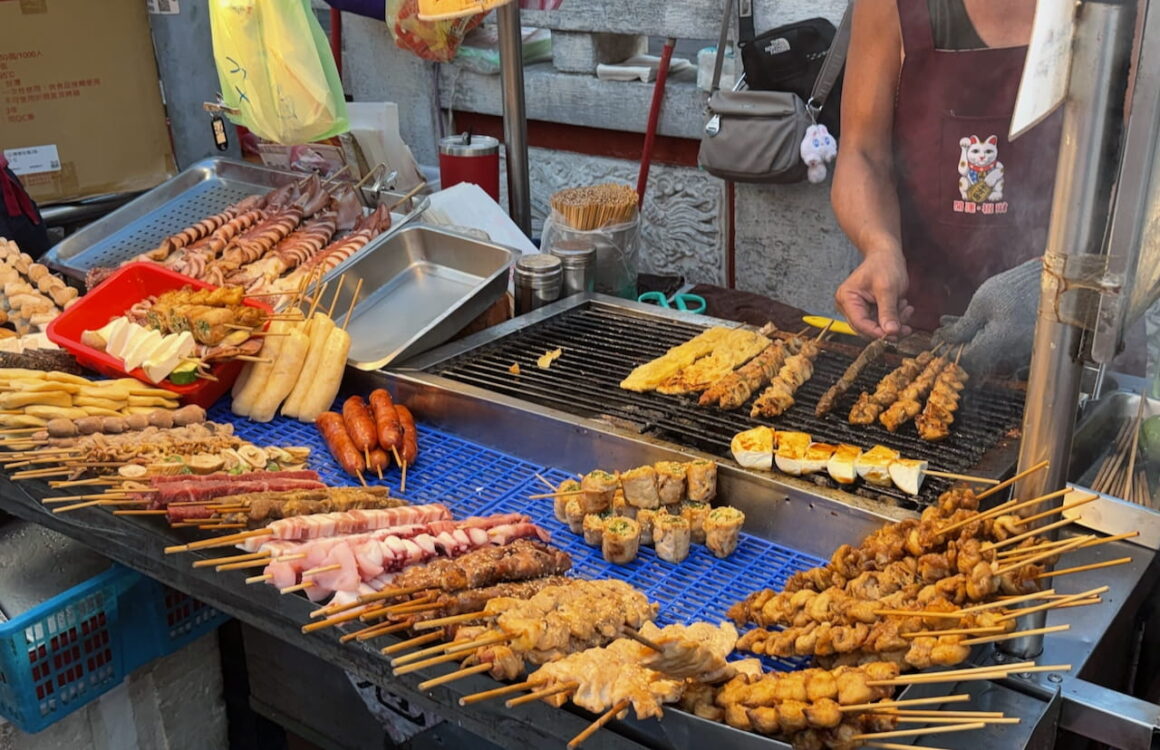
Food is a major part of the experience, with plenty of familiar Taiwanese favourites to try. Popular choices include large, crispy fried chicken cutlets, oyster omelets, herbal pork rib soup and stinky tofu. There are also plenty of options for those with a sweet tooth, including fresh mango shaved ice, bubble tea and desserts made with brown sugar tapioca pearls. With so much on offer, it is worth taking your time to wander through the different sections rather than settling on the first food stall you come across.
There is more to Shilin than eating. The market also has a good selection of clothing, accessories, phone-related items and souvenirs. You will find traditional carnival-style games among the stalls, adding another element to the evening, particularly for families and visitors who enjoy a little more than simply sampling the food.
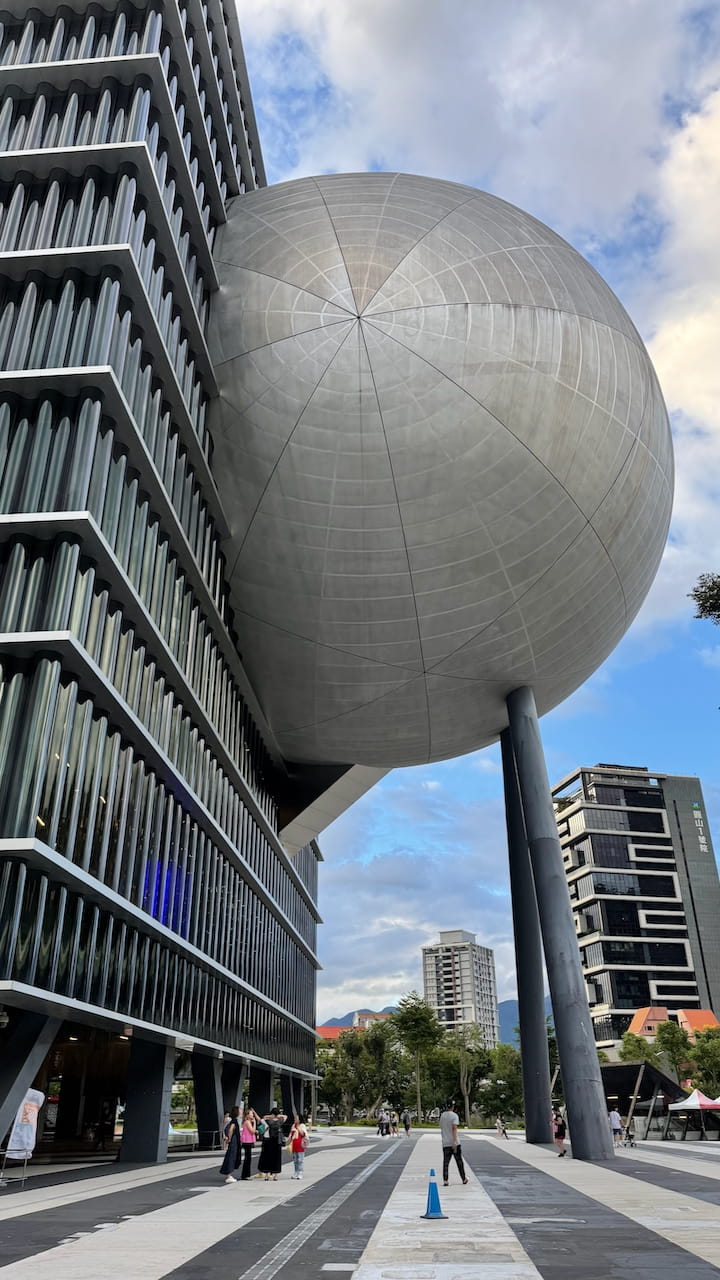
While Taipei has several other night markets worth exploring, Shilin would be our recommendation for a first visit because of its size, variety and lively atmosphere. Raohe Street Night Market is a smaller, more compact alternative arranged along a single main street, with a strong reputation for its traditional street food, particularly its famous pepper buns. Ningxia Night Market is smaller still and more focused on food, making it a good choice for visitors who want to concentrate on Taiwanese dishes rather than shopping and entertainment. Each offers a slightly different experience, but Shilin provides the broadest introduction to Taipei’s night-market culture.
Huashan 1914 Creative Park
Originally established as a winery during the Japanese colonial period in 1914, Huashan 1914 Creative Park has since been repurposed as a cultural space for art, design, entertainment and independent businesses. Located in Taipei’s Zhongzheng District, the complex retains much of its original industrial character, with restored brick warehouses and older buildings now providing a setting for a varied programme of contemporary creative activities.
Visitors can wander between the former industrial buildings, many of which house independent design shops, artisan studios, cafés and temporary exhibitions. The exhibitions and installations change regularly, so there is often something different to discover depending on when you visit. The park also has a connection to Taipei’s independent arts and entertainment scene. SPOT-Huashan Cinema screens independent and art-house films, while Legacy Taipei is a popular live music venue hosting performances by local and international artists.
The outdoor areas are equally enjoyable to explore, with open courtyards and landscaped spaces providing room to sit, take a break or browse occasional markets and pop-up events. Weekends can be particularly lively, when craft markets, performances and other activities bring additional energy to the complex. Cafés, restaurants and bars provide plenty of options if you want to spend a little longer here rather than simply walk through.
We think Huashan 1914 is worth including in a visit to Taipei, particularly for those interested in art, design and the city’s contemporary cultural scene. Its appeal lies in the contrast between the preserved industrial buildings and the creative businesses and events that now occupy them. It is also a pleasant change from Taipei’s more traditional temples, historic landmarks and shopping districts, offering another perspective on how the city continues to evolve.
Ximending
Often compared to Tokyo’s Harajuku, Ximending is one of Taipei’s liveliest shopping and entertainment districts. Located in the Wanhua District, just outside Ximen MRT Station, its pedestrian-friendly streets are particularly popular with younger visitors and those interested in fashion, music, pop culture and street entertainment. The area has an interesting mix of older Japanese-era buildings, colourful shopfronts and modern digital billboards, creating a distinctly urban atmosphere that becomes especially lively in the evening.
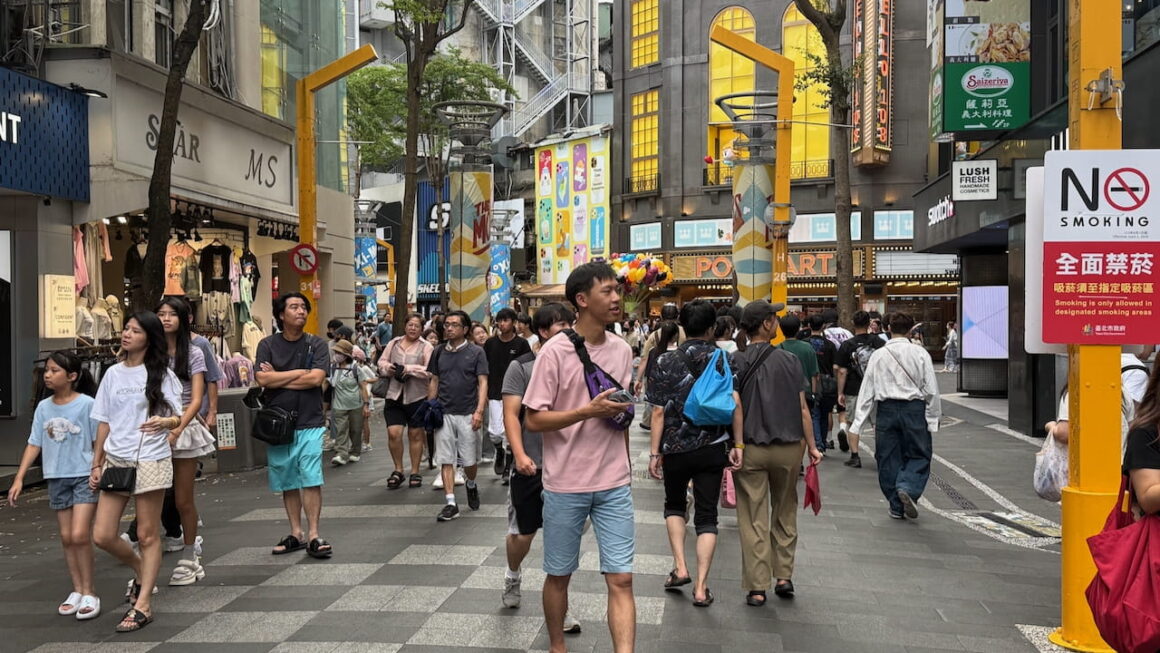
Shopping is one of the main attractions, with everything from streetwear boutiques and independent retailers to shops selling anime merchandise, collectibles and other popular culture items. Multi-level arcades, claw machines and gaming venues add to the activity, while street performers, dancers and musicians can often be found entertaining visitors in the open spaces. Nearby, Tattoo Street and America Street are worth exploring for their distinctive street art, murals and alternative retail shops.
One of Ximending’s most recognisable landmarks is The Red House, an octagonal red-brick building dating from 1908. Originally built as a public market, it has since been restored and repurposed as a cultural and creative space. Today, visitors can browse independent designer shops, artisan products and creative displays, making it an interesting stop amid the surrounding commercial activity.
Food is another reason to spend time in Ximending. The district has a good selection of Taiwanese street food and casual dining options, including braised beef noodles, Ay-Chung Flour-Rice Noodles, crispy fried chicken and bubble tea. With restaurants and food stalls spread throughout the area, it is easy to combine a little sightseeing and shopping with an informal meal.
Ximending is quite different from Taipei’s more traditional neighbourhoods and historic attractions. Its appeal is the opportunity to experience a younger, more contemporary side of the city, with plenty to see and do both during the day and after dark. For visitors interested in shopping, street culture and local food, it is well worth setting aside a few hours to explore.
A Day Trip from Taipei: Houtong Cat Village, Shifen Waterfall & Old Street, and Jiufen
Houtong Cat Village is a charming hillside community in Taiwan’s Ruifang District, renowned for its hundreds of friendly, roaming felines.
Originally a prosperous coal-mining town during the mid-20th century, Houtong fell into economic decline after the mines closed in the 1990s, causing many young residents to leave. Its transformation began in 2008 when a local cat lover organized volunteers to care for the town’s abandoned street cats. They posted photos online, capturing the hearts of tourists and turning Houtong into a global eco-tourism destination.

Today, visitors can stroll through the photogenic, cat-themed streets, photograph the residents, and relax at cozy cafés serving feline-inspired pastries and coffees. You can also explore the historic coal processing plant ruins and walk across the unique Cat Bridge.
The village is located about 35 kilometers east of Taipei, Houtong is easily reachable via a 50-minute ride on the local TRA train from Taipei Main Station. You only need 2 to 3 hoursto properly explore the entire village.
Jiufen Old Street is a breathtaking mountainside village steeped in history, it’s world-famous for being the vibrant, cliffside market alley lined with glowing red lanterns, legendary and for its old-world Taiwanese charm and be on the lookout for the stunning panoramic views of the ocean below.
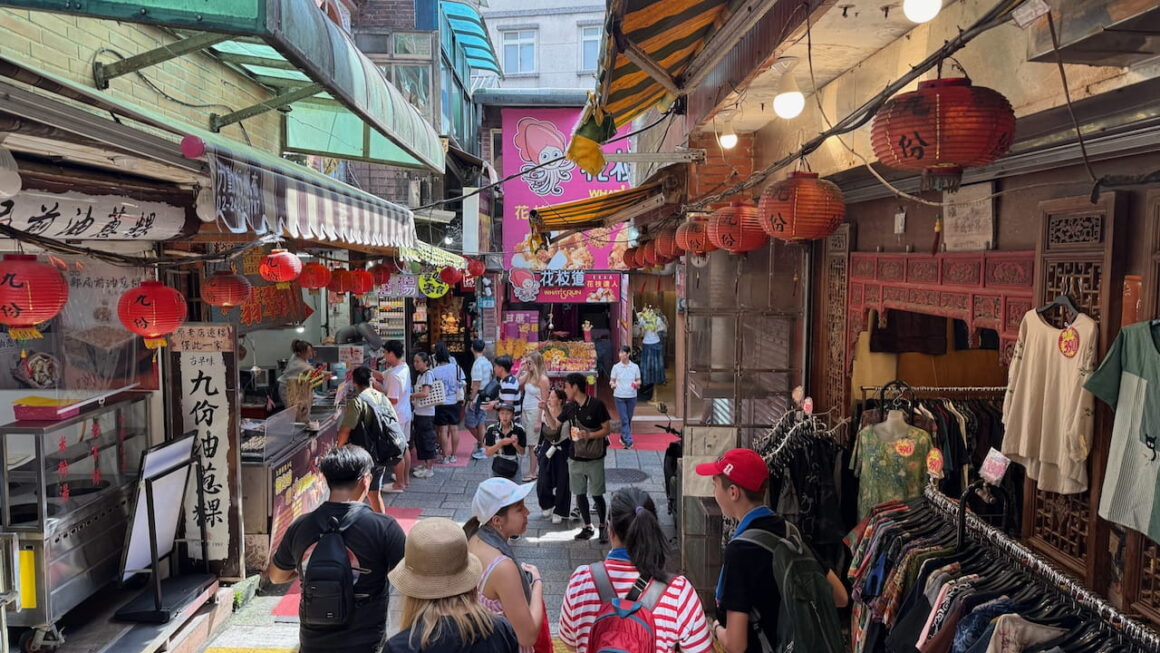
Originally an isolated gold-mining hub established during the Qing Dynasty, it boomed during the Japanese colonial era. Today, it is world-famous for its atmospheric, narrow alleyways lined with glowing red lanterns, traditional teahouses, and spectacular ocean views.
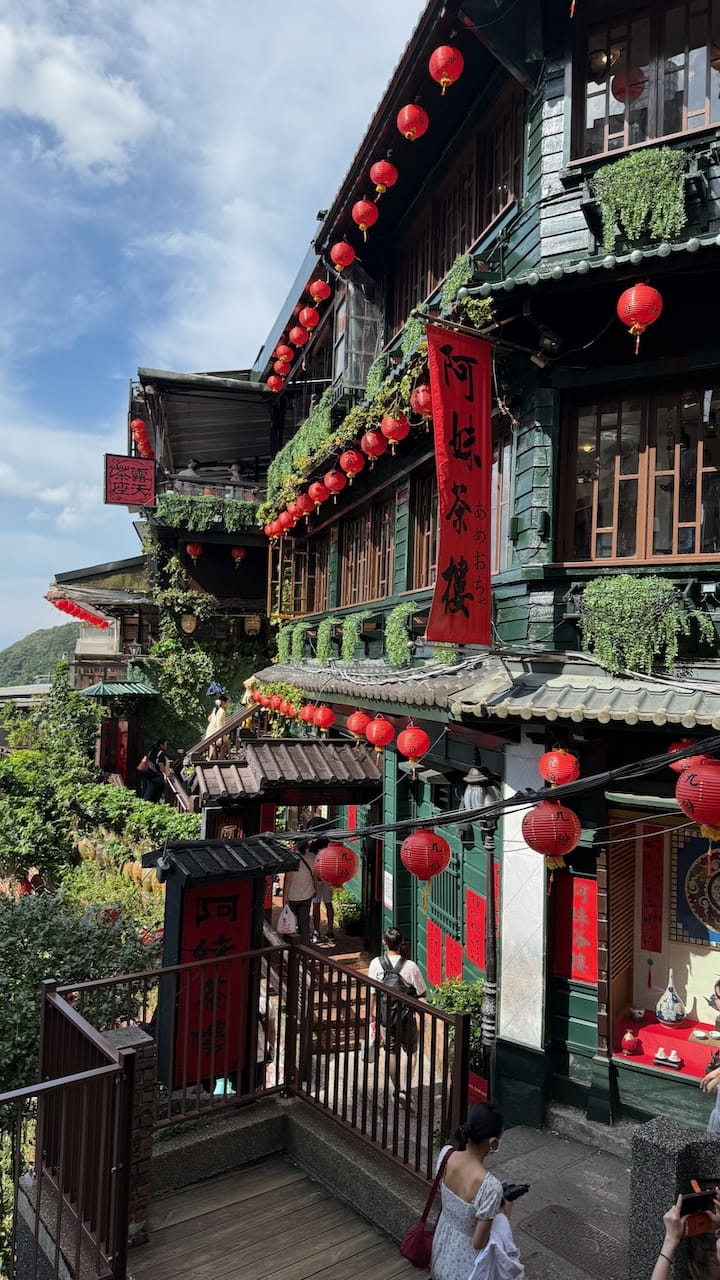
Visitors can sample iconic local treats like taro balls, pineapple cakes and peanut ice cream rolls, or sip tea at the famous A-Mei Teahouse. The iconic A-Mei Teahouse is a must see in Jiufen, universally famous for its striking multi-story wooden facade, glowing red lanterns, and a distinct aesthetic that beautifully mirrors the bathhouse from the animated world of Spirited Away. Perched high on the mountainside, it offers unparalleled panoramic views of the rugged Northeast Coast and the sweeping Keelung Harbor below.
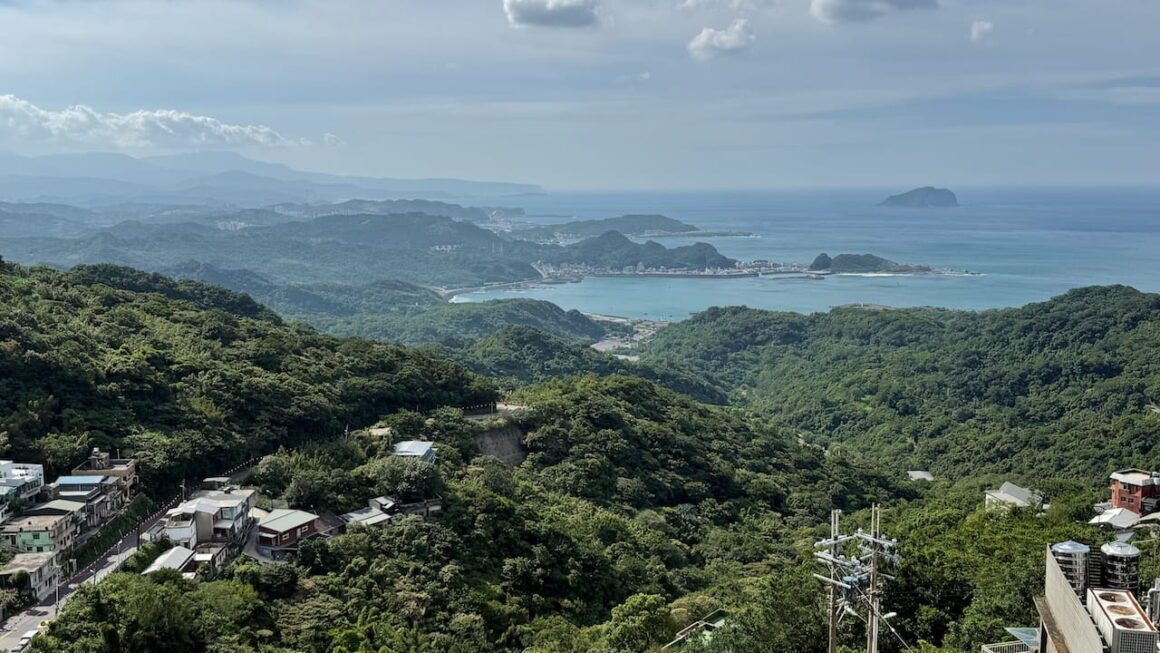
Securing a reservation is important if you want a seat on the coveted outdoor terrace during sunset or the bustling autumn and winter peak tourist seasons.
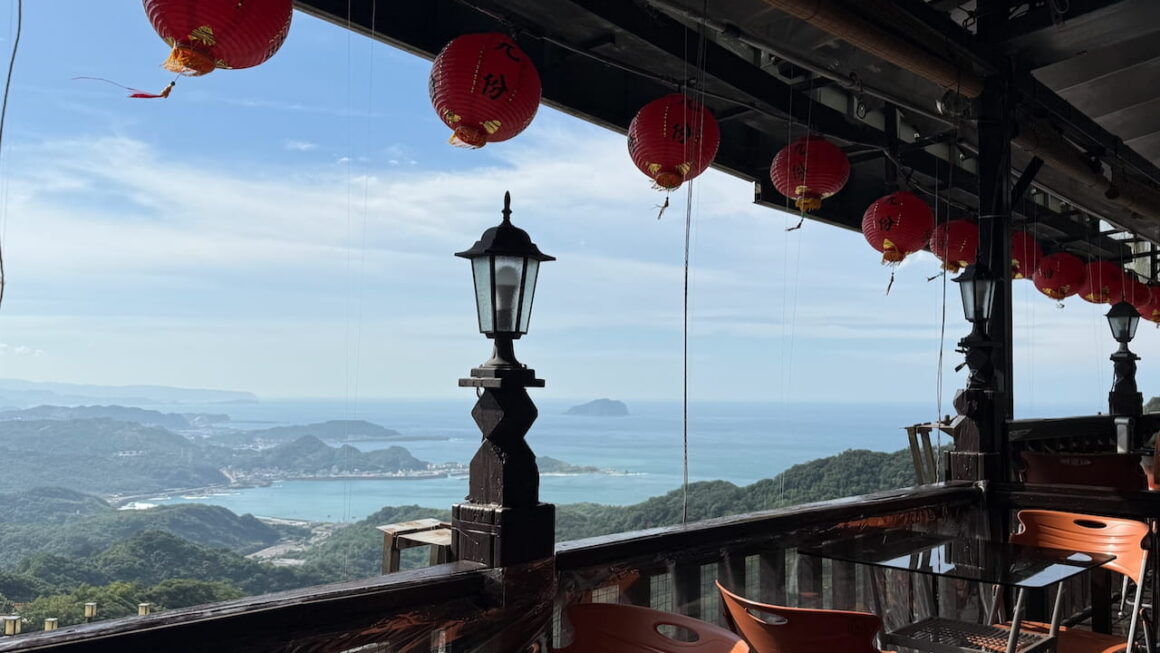
Booking in advance ensures you won’t miss out on sipping premium Taiwanese oolong tea while watching the twilight completely transform the village into a glowing, magical landscape.
Jiufen Old Street is located roughly 40 kilometers from Taipei, it is a magnificent destination to explore for 2 to 3 hours, especially as late afternoon transitions into dusk.
Just a short drive away lies Shifen Old Street and Waterfall. Shifen’s history is anchored in its old coal transport railway line, which uniquely runs directly through the center of the bustling marketplace.
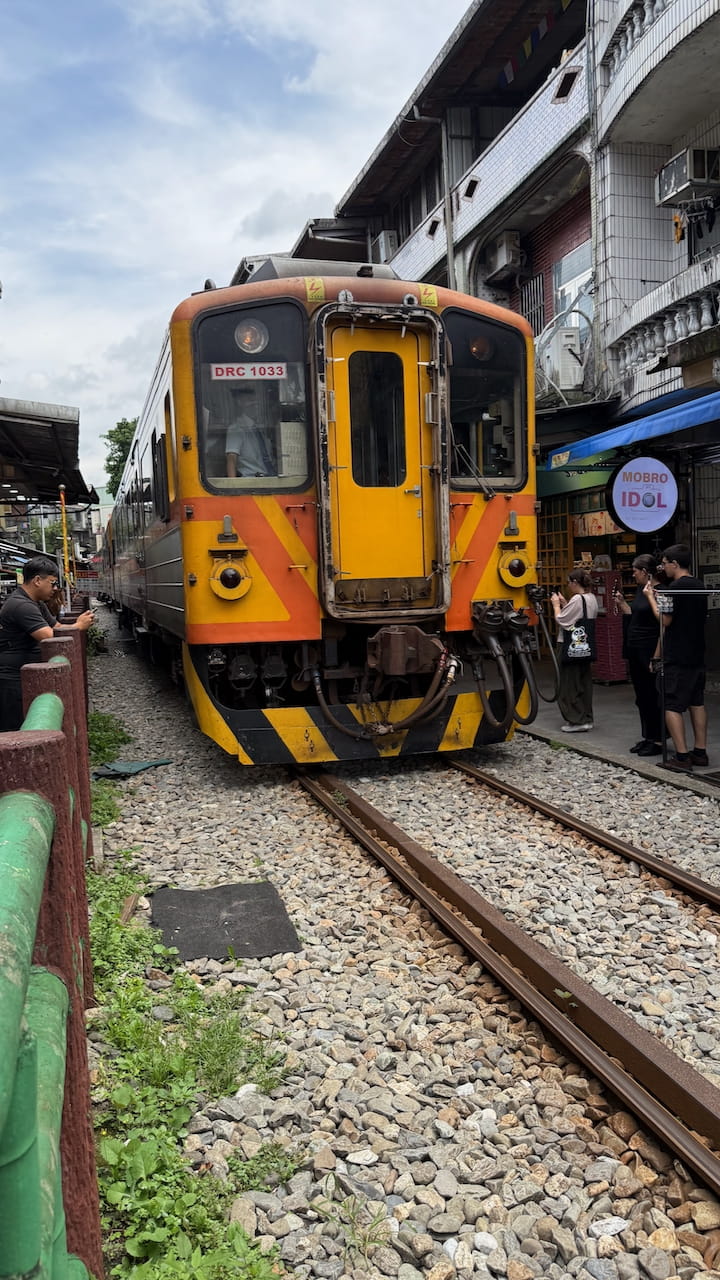
The main attraction here is releasing a traditional sky lantern right on the active train tracks, painting your wishes on the paper before sending it skyward.
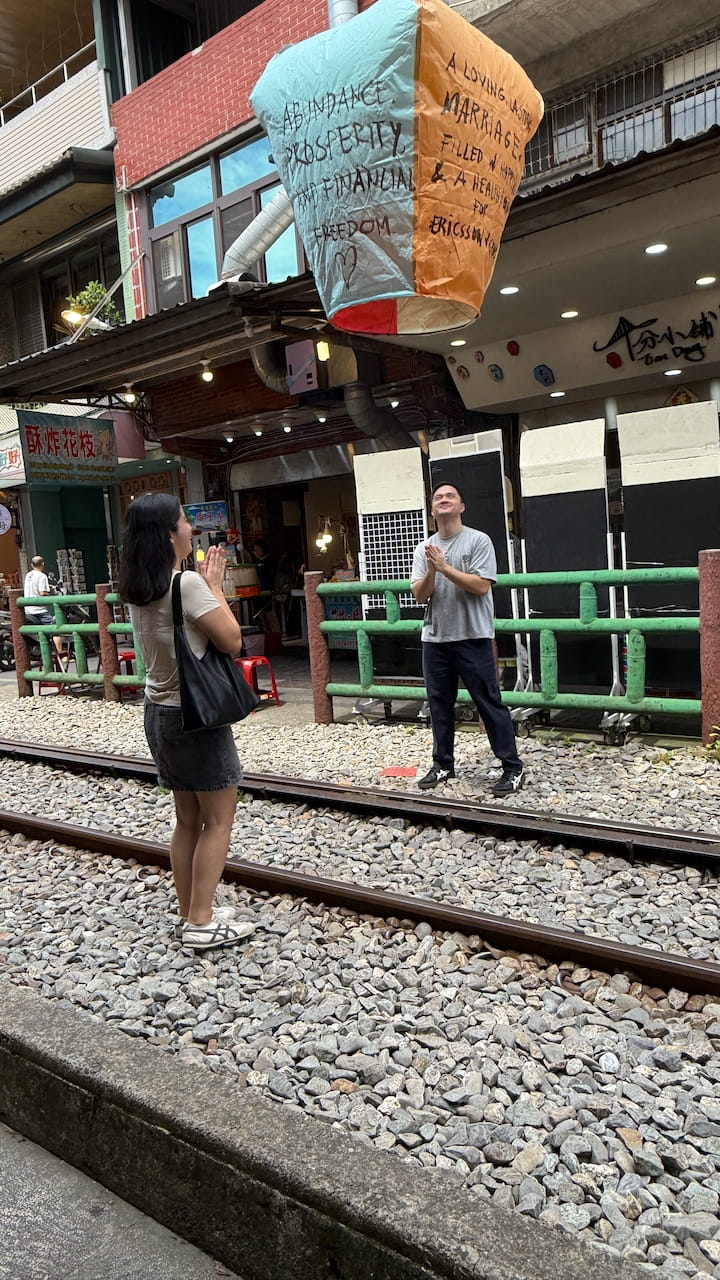
A quick 15-minute walk down the trail leads to the Shifen Waterfall, a dramatic 20-meter-tall and sweeping 40-metre horseshoe like cascade widely celebrated as Taiwan’s “Little Niagara.” You will want about 1-2 hours here to fully experience the market and the falls.
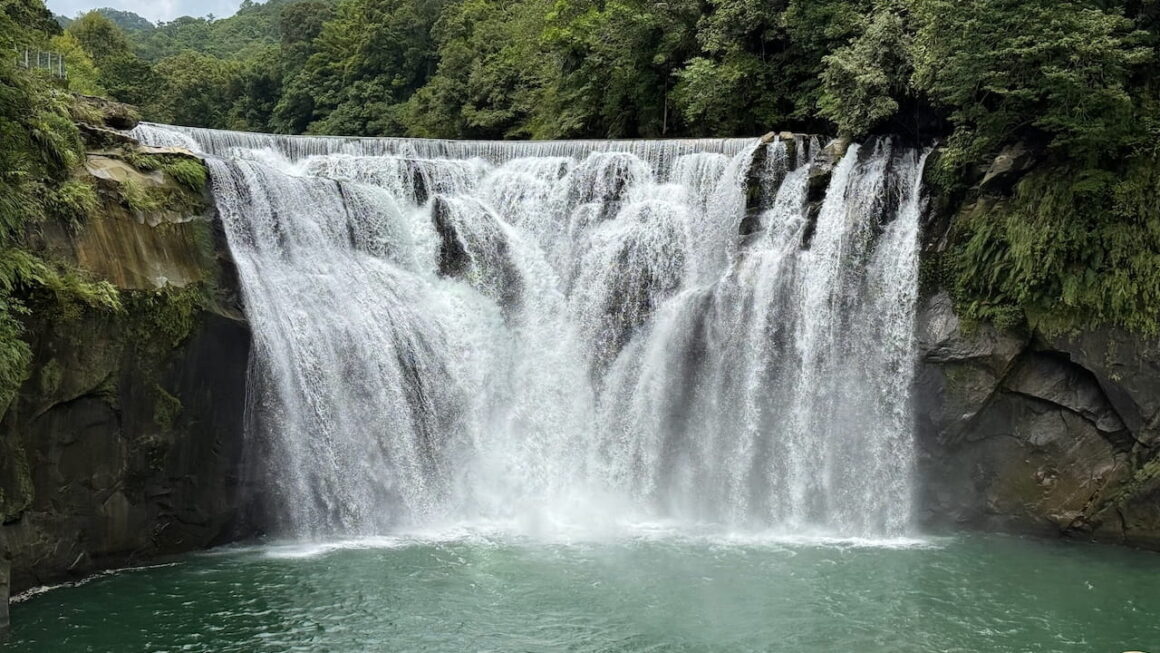
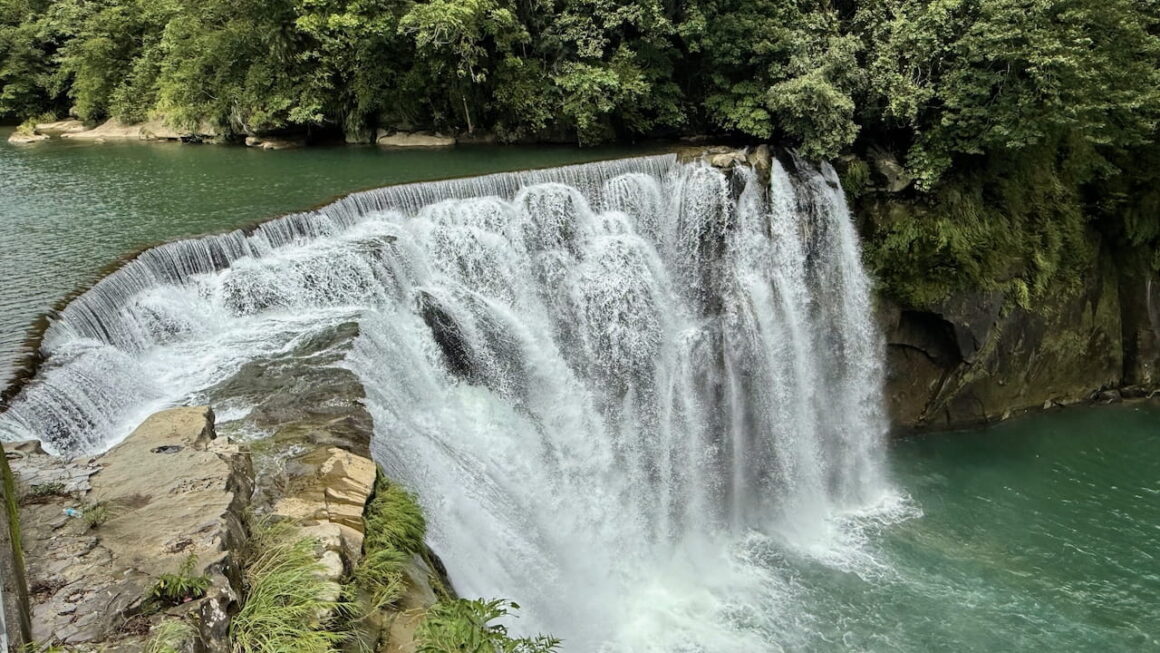
We choose to hire a private car and driver, which allowed us to fit Houtong, Shifen, and Jiufen into a single day trip. Our driver expertly navigated the winding mountain roads, saving us from waiting on bus and train transfers. We would suggest that a perfect itinerary starts early to mid-morning with the cats at Houtong, moving to Shifen for lunch and a sky lantern release, and wraps up at Jiufen just in time to watch the iconic lanterns light up the evening sky.
A Day Trip to Yehliu Geopark
Yehliu Geopark is world-famous for its surreal, alien-like landscape of unique geological formations sculpted by centuries of sea erosion, fierce winds, and crustal movement along a narrow cape. Strolling along the coastal pathways, you will see a breathtaking array of honeycomb rocks, mushroom rocks, ginger rocks, and sea-eroded trenches that feel completely detached from earth.
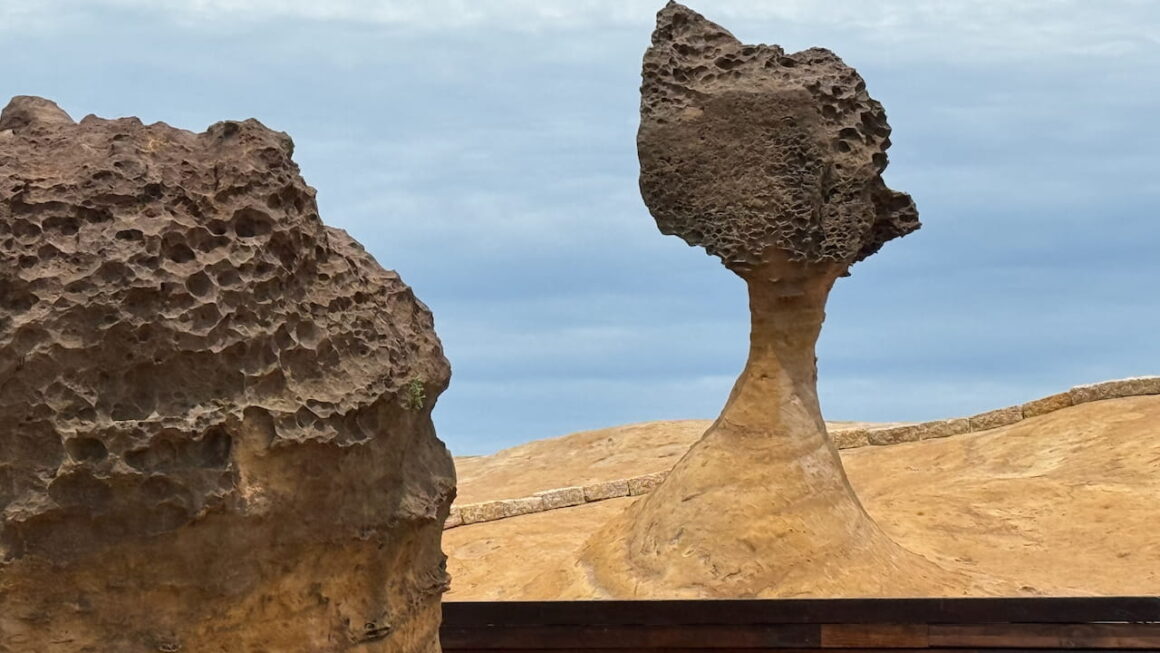
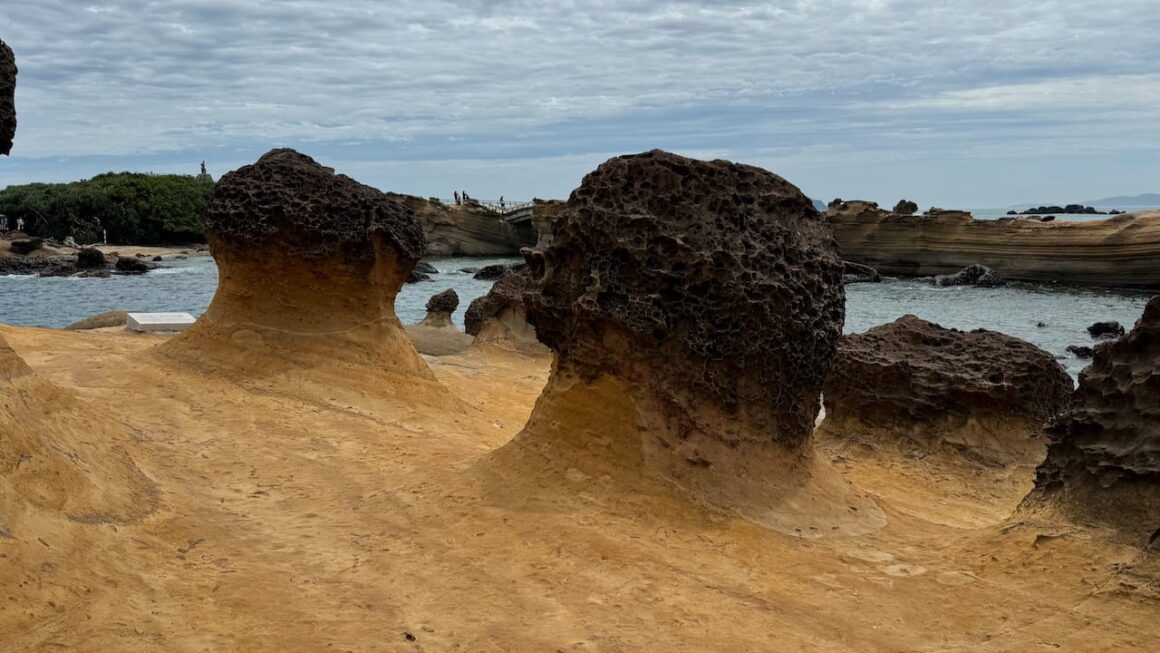
The park’s absolute crown jewel is the iconic “Queen’s Head”, a majestic rock formation that perfectly resembles the elegant silhouette of an ancient Egyptian queen, alongside other famous shapes like the Fairy’s Shoe and the Dragon’s Head. It is a stunning natural gallery that showcases the raw, artistic power of nature right on the edge of the deep blue ocean.
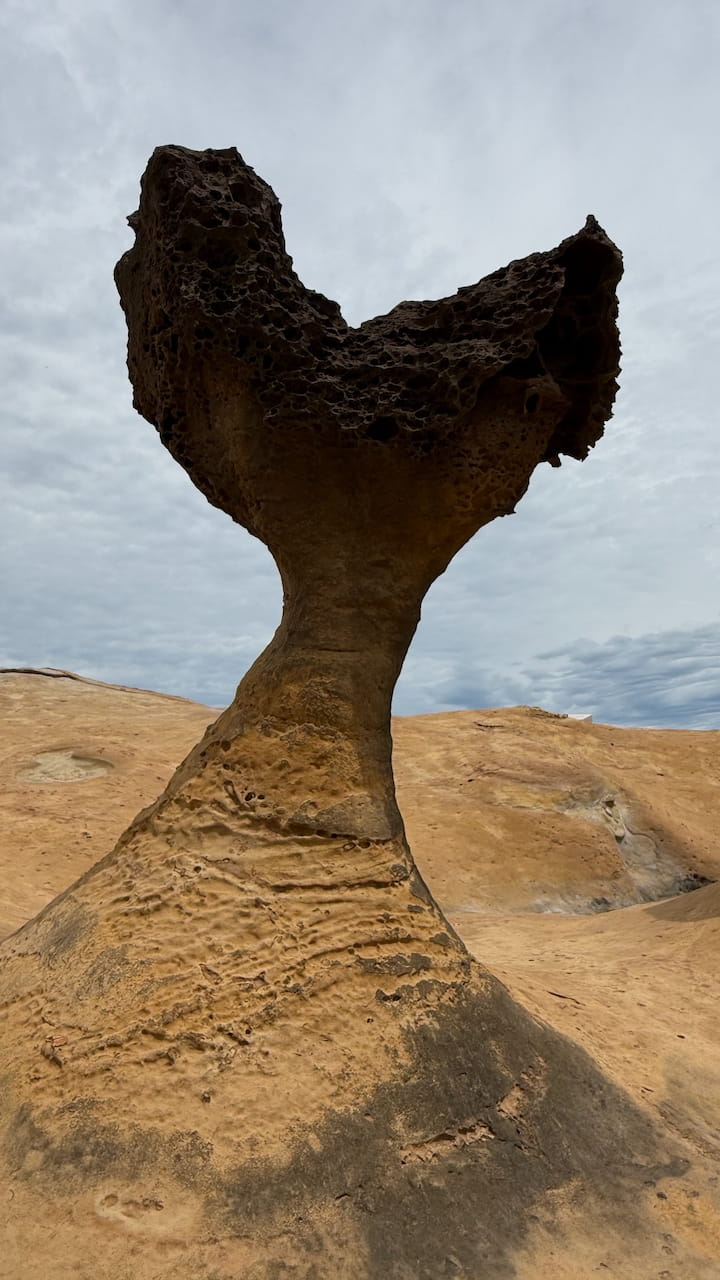
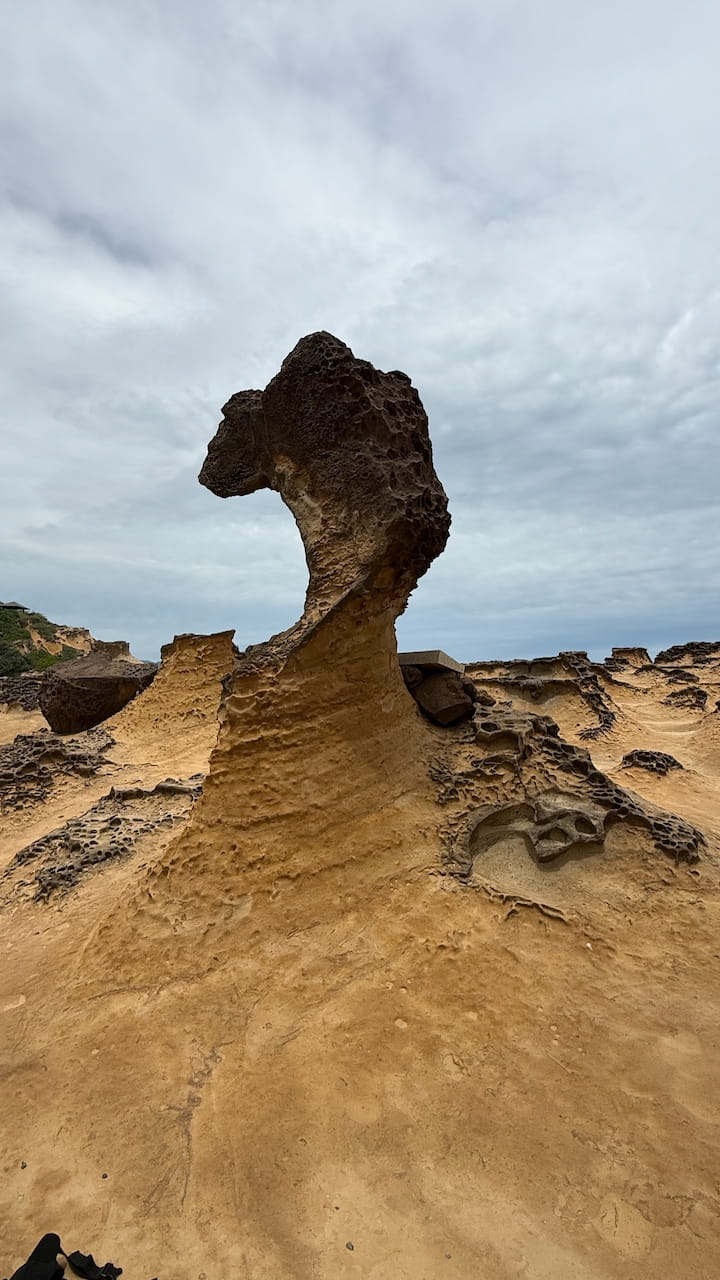
To properly explore the park, take photos, and walk the scenic trails without rushing, we’d recommended you will need about 1.5 to 2 hours.
We hired a car and driver which gave us a lot of flexibility. We’d suggest arriving early in the morning is highly recommended to beat the tour buses and view the Queen’s Head before the lines form.
Other popular travel options include:
- The Express Bus:
Taking the Kuo-Kuang Bus 1815 directly from Taipei Main Station West Bus Station A straight to the Yehliu stop, which takes about 90 minutes.
- Shuttle Buses: Booking a dedicated, point-to-point tourist shuttle or hop-on-hop-off day tour bus originating from central Taipei.
- North Coast Transit: Taking the Tamsui-Xinyi (Red) Metro Line to Tamsui Station, then transferring to the Crown Northern Coast Shuttle Bus 716.