
Visiting Scotland felt like stepping into a living storybook—a land of dramatic landscapes, ancient castles, and proud traditions that pulse through every loch and glen. Located in the northern part of the United Kingdom, Scotland shares a border with England to the south and is surrounded by the North Sea and the Atlantic Ocean. Though part of the UK, it maintains a distinct national identity, language traditions, and deep sense of pride that make it truly unique. For us, exploring Scotland wasn’t just about seeing its sights—it was about experiencing the spirit of a country that beautifully blends history, myth, and modern life.
We began our journey in Edinburgh, Scotland’s majestic capital. Perched on a series of volcanic hills, the city feels like a perfect harmony of past and present. The medieval Royal Mile stretches from the towering Edinburgh Castle to the stately Palace of Holyroodhouse, and wandering its cobbled streets was like walking through centuries of history. We climbed Arthur’s Seat for panoramic views of the city and browsed through charming bookshops and whisky bars in the Old Town. Visiting during the Edinburgh Festival in summer filled the streets with art, laughter, and performances from every corner of the world, while in winter, the city sparkles with Christmas markets and Hogmanay celebrations.
From Edinburgh, we drove to Glasgow, Scotland’s largest city and cultural heartbeat. While often seen as the modern counterpart to Edinburgh’s old-world charm, Glasgow impressed us with its bold architecture, vibrant arts scene, and friendly people. We explored the Kelvingrove Art Gallery, admired Charles Rennie Mackintosh’s elegant designs, and soaked in live music at cozy pubs—a true reflection of Glasgow’s creative soul.
Heading north, Inverness, known as the gateway to the Highlands, captured our hearts with its charm and proximity to the legendary Loch Ness. We couldn’t resist scanning the waters for signs of the elusive Nessie before exploring the nearby Urquhart Castle ruins, which stood proudly over the misty loch. From Inverness, we ventured further west to Oban, a picturesque seaside town famous for its harbor views and fresh seafood. Known as the “Gateway to the Isles,” Oban is also home to one of Scotland’s renowned Oban whisky distillery, where we learned about the craft and sampled its smooth results.
One of the most breathtaking parts of our journey was exploring the Isle of Skye, a place that truly feels like another world, and the most famous distillery on the Isle of Skye, namely Talisker. The island’s rugged landscapes, from the dramatic cliffs of the Quiraing to the mystical Fairy Pools, left us in awe. Every turn revealed new scenery that looked like it had been painted by nature herself.
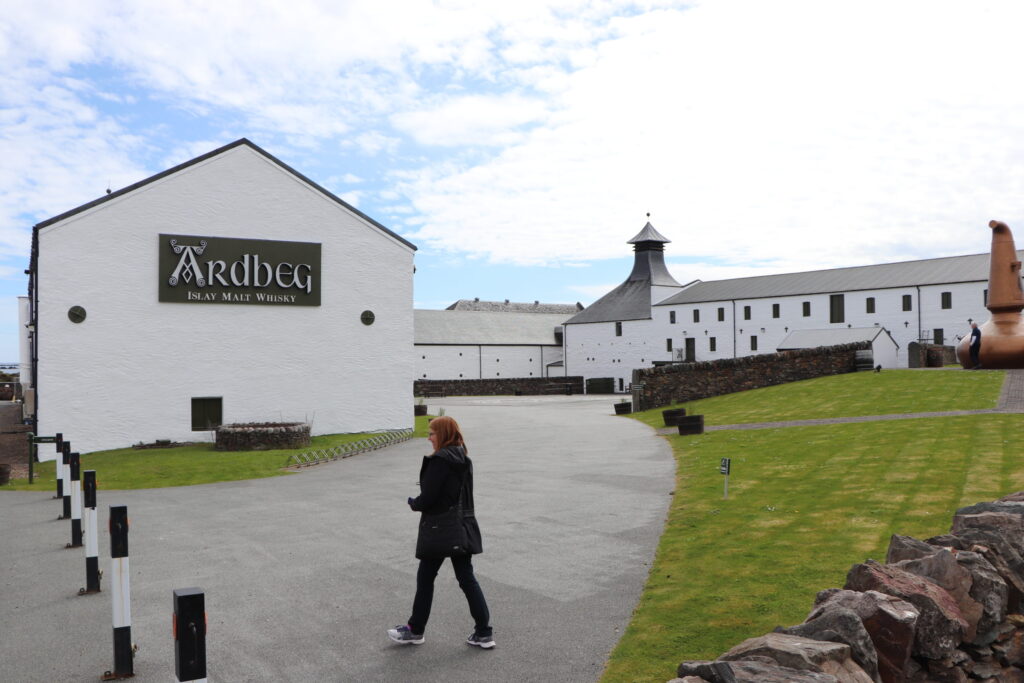
Our travels also took us to Islay, known as the “Queen of the Hebrides,” where the air carries the unmistakable scent of peat smoke from its world-famous whisky distilleries which include Ardbeg, Bowmore, Bruichladdich, Lagavulin, and Laphroaig. Touring the distilleries here felt like a pilgrimage for whisky lovers, with each sip reflecting centuries of craftsmanship and island character.
In the northeast, we visited Elgin and Lossiemouth, where Scotland’s quieter beauty unfolded. Elgin’s ancient cathedral ruins and charming town center reflected its medieval roots, while nearby Lossiemouth, with its sandy beaches and dramatic coastline, offered peace and serenity—perfect for long walks and quiet reflection.
Traveling through Scotland was surprisingly easy. The train network connects major cities, while renting a car allowed us the freedom to explore the Highlands and islands at our own pace. Despite its growing popularity, Scotland never felt overwhelmingly busy—just alive with stories, scenery, and soul.Whether standing before a castle, wandering through windswept moors, or sipping whisky by a crackling fire, Scotland offered us an experience that felt both timeless and deeply personal. It’s a land that leaves its mark on your heart long after you’ve left.
For more information on scotch read our post: Scotland’s Scotch Trail:
The Best Things to do in Scotland
Edinburgh
Edinburgh is Scotland’s capital city and is home to almost 500,000 people. There is plenty to see in this beautiful historic city with an Old Town and we spent three full days here.

We then headed to the Highlands via Cairngorms National Park, for some castle visits and scotch tasting.
Cairngorms National Park
Cairngorms is Britain’s largest national park, located 127 miles north of Edinburgh, and is 4528 sq kilometres in area. Five of Scotland’s six highest mountains lie within the park, and nearly half of the land is considered ‘wild land’. Our first stop in the park was at Balmoral Castle in Aberdeenshire, the Scottish holiday home to the Royal Family. (See our Top 12 Scottish Castles)
Near the end of the park on B9153, close to where it meets the A938, we came across the beautiful Old Packhorse Bridge. It was built in 1717 and is the oldest stone bridge in the highlands, making for some great photography.

There are several other photography worthy bridges in the Speyside region, most notably the Craigellachie Bridge, a cast iron bridge built more than 200 years ago which spans the River Spey. The Craigellachie Bridge was cast in sections in Wales and then transported by sea to the Moray Firth, and finally by horse-drawn wagons to Craigellachie.


Lossiemouth and Buckie
Less than 6 miles north of the city of Elgin in the Speyside Region are two lesser known, but beautiful, quaint seaside towns, Lossiemouth and to the east, Buckie.
Lossiemouth is best known as the home of RAF Lossiemouth, and you can often hear the fighter jets as they race across the sky on training exercises. The East Beach has beautiful sand dunes and can be reached by a pedestrian bridge from Lossiemouth. Near the dunes you can find a multitude of restaurants serving delicious seafood.


Twenty miles to the east, is Buckie, a small fishing town on the Moray Firth coast. If it’s not too windy, walk the stunning beaches and if you’re lucky you might be able to see dolphins, otters and ospreys.

Sitting right on the northeast coast in the heart of the Highlands, is Scotland’s most northerly city. The Old Town features Inverness Castle, (See our Top 12 Scottish Castles) that overlook the River Ness. Its open to the public and from the Inverness Castle Viewpoint you have amazing 360° views of the city and the surrounding highlands. Other notable things to see are the late 19th-century Neo-Gothic St. Andrew’s Cathedral and the Victorian Market filled with souvenir and gift stores, cafes and eateries.
As you head West on the A87 to the Isle of Skye, another must see castle is Eilean Donan (See our Top 12 Scottish Castles), one of the most recognized castles in Scotland.
Skye
The Isle of Skye is located in the Highlands of Scotland and is known for its magnificent scenery, stunning coastline and rugged landscapes that will truly take your breath away.

You’ll also find the picturesque village of Portree, overlooking the bay with colorful buildings lining the harbour. Portree is a popular weekend getaway for many Scots, so if you’re going to be there on a Scottish bank holiday, be sure to make dining reservations in advance as they fill up very quickly.

Things to see and do on Skye
The Old Man of Storr and the Quiraing
Hike the 3.8 km route up the Old Man of Storr, on the north of Skye on the Trotternish Peninsula, a large formation of rock that can be seen for miles around. It’s not a difficult hike, but it’s best to wear proper shoes, flip flops are probably not a wise choice as the weather in Scotland can be very unpredictable and a deluge of rain is not uncommon.


If you have the opportunity, hike the Quiraing, which is at the northern tip of Skye. This 4.5-mile circuit is a more challenging hike and takes you up and over the pinnacles and offers amazing views.

Fairy Pools
The famous Fairy Pools are found in the south-west at the foot of the Black Cuillins and bring visitors from all over the world. Drive the single-track road that leads to Glenbrittle from Carbost where you come up to the parking lot. It’s a short walk, about 20 minutes, along the gravel path to the first waterfall that marks the start of the pools. It’s a pretty easy walk but note that you do have to occasionally cross over stepping-stones. The path from the car park looks steep, but it’s only the first few meters that are the worst although if raining, the path can be muddy.


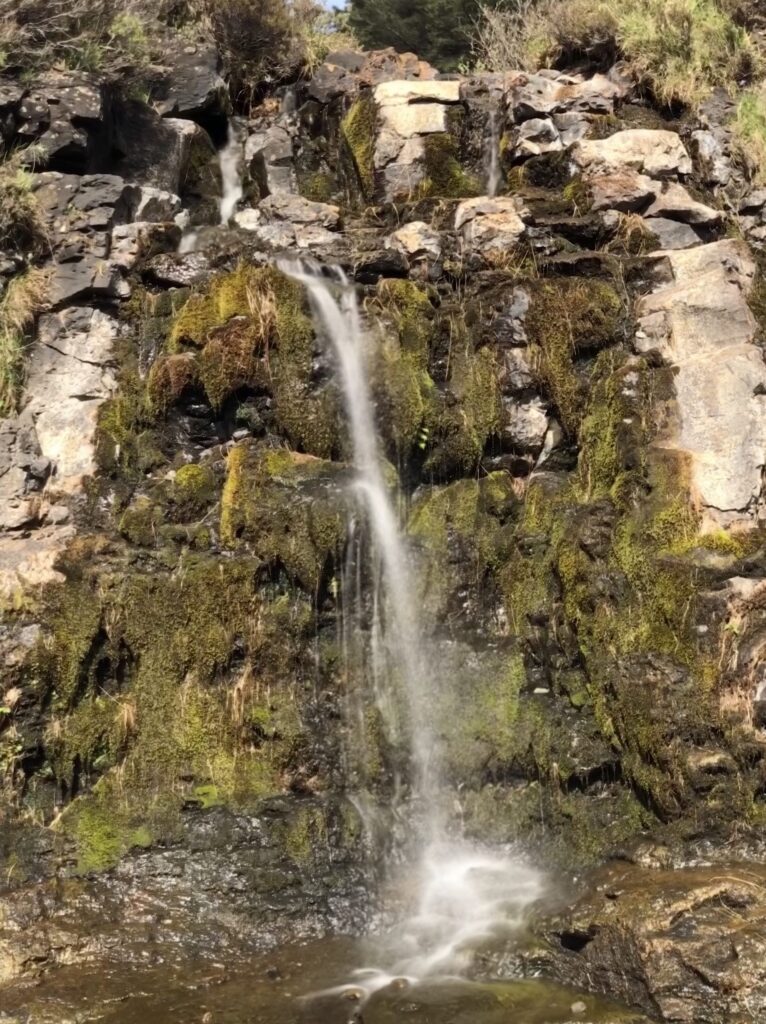

The crystal-clear pools are fed by spring water from a series of waterfalls from the Cuillin Mountains and should not be missed.
If you’re a scotch lover, don’t miss the Talisker Distillery on Skye. Learn more about Scotlands Scotch Trail


How many days should you spend on Skye?
We’d recommend two days, it looks small, but there’s a lot to see here.
Oban
Oban is a beautiful seaside town, nestled on Scotland’s west coast and is the Seafood Capital of Scotland where you’ll find some of the finest seafood in the world. They say that the secret is the cold, pristine waters that offer up a huge variety of top-quality fish and shellfish, including oysters, mussels, langoustines, prawns, scallops, crab, mackerel, haddock, herring and lobster.

You’ll also find McCaig’s Tower, a prominent landmark overlooking the town, the Oban Distillery, the Oban War and Peace Museum, not to mention the many shops and restaurants.
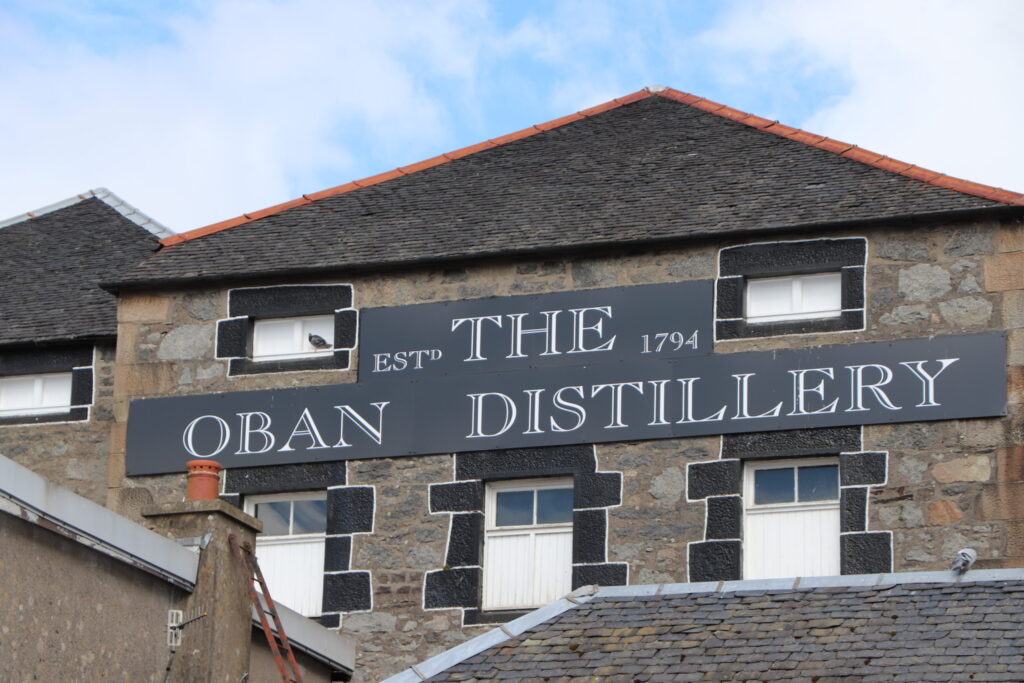
Oban is a great place to make as your home base while you visit the Falls of Lora (6 miles from Oban) that are caused when the tide level in the Firth of Lorn drops below the level of the water in Loch Etive to create a magnificent display of cascading torrents, and explore nearby castles such as Kilchurn and Inveraray.


Islay
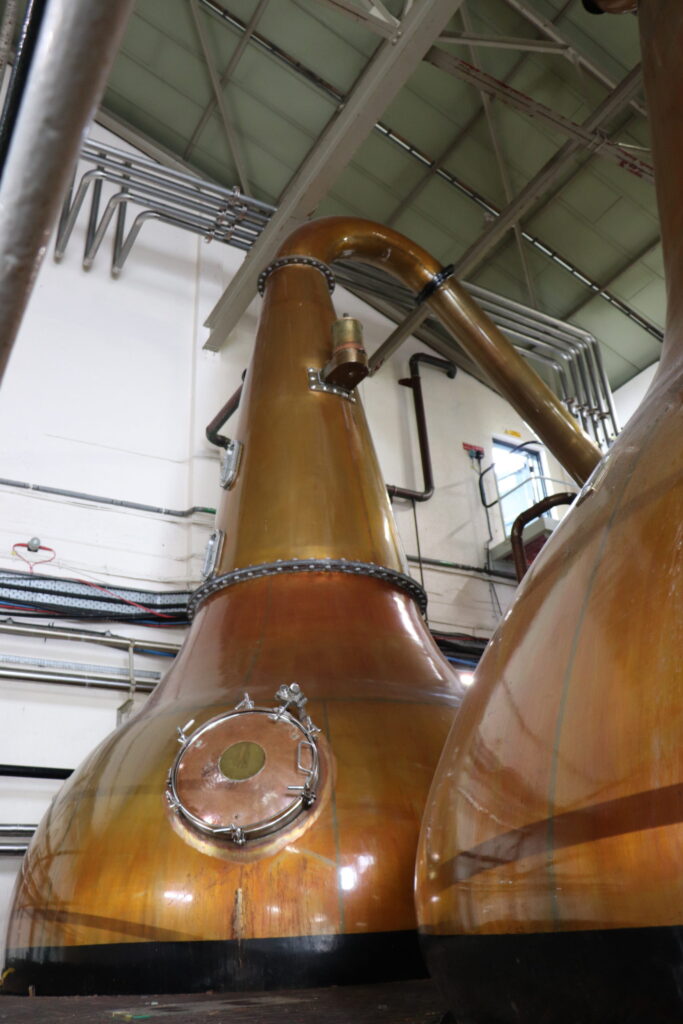
Pronounced eye-lah, Islay is the southernmost island of the Hebrides and is often called the Queen of the Hebrides. Islay is reach either by air from Glasgow or a ferry from Kennacraig. There are 9 whisky distilleries, quiet sandy beaches, peat moss bogs, as well as a golf course with world class facilities. We only were able to spend 1 night at the Machrie Hotel & Golf Links, but we’d recommend Islay for anyone interested in golfing or scotch tours.




Glasgow
Glasgow is Scotland’s biggest city and home to nearly 600,000 people. There is incredible historic architecture from the 18th and 19th century which contrasts beautifully with new modern buildings. There are many galleries, museums, excellent shopping and restaurants and pubs.


We stopped for a pint in Glasgow’s oldest pub, Horse Shoe Bar on Drury Street that dates as far back as 1846 and is said to have the longest bar in Britain, measuring 104 feet. Unfortunately, our schedule only allowed for an afternoon visit, but if we have another chance we’d add another day here.

This marked the end of our first trip to Scotland and definitely not our last. Even though some days were cooler than others, no matter when you visit, you will always get a warm welcome!