
A Meaningful Koblenz Two-Day Trip: Where the Rhine and Moselle Define the Journey
After more than thirty years of traveling through Germany and across Europe, we’ve come to value places that feel quietly important rather than overtly famous. Koblenz is exactly that kind of destination. Often passed through rather than lingered in, it rewards travelers who slow down and stay awhile. This Koblenz two-day trip, arriving from elsewhere in Germany or neighboring countries, offers a rich blend of history, wine culture, riverside scenery, and seasonal charm. We arrived by train from Luxembourg and found the journey seamless—an easy transition into one of Germany’s most historically significant towns.
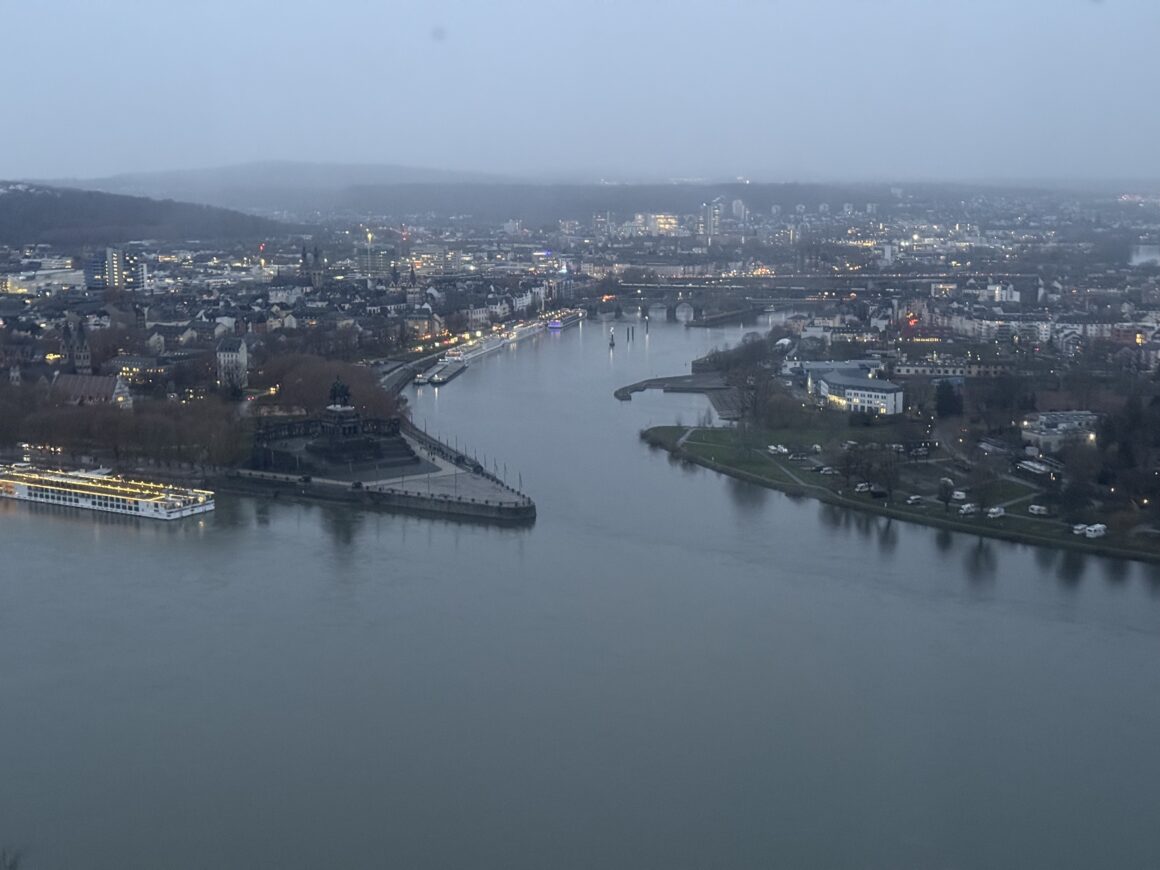
Situated at the confluence of the Rhine and Moselle Rivers, Koblenz is a natural crossroads, not only geographically but culturally. It has long been a meeting point for trade, ideas, and wine, and that layered history still shapes the city’s character today.
Getting to Koblenz from Germany and Europe
Koblenz is exceptionally well connected, making it an easy addition to a broader European itinerary. We traveled by train from Luxembourg, a straightforward journey of roughly two and a half hours with scenic stretches along the Moselle. Rail connections also link Koblenz easily with Frankfurt (about 1.5 hours), Cologne (just over an hour), Bonn, Mainz, and Stuttgart, making it accessible from many major German centers.
For those arriving by car, Koblenz sits at the intersection of key motorways, though parking in the historic center can be limited. River cruises along the Rhine and Moselle also stop here, offering a slower arrival. Regardless of how you arrive, Koblenz feels immediately approachable, compact, walkable, and well organized.
First Impressions: A City Shaped by Two Rivers
What defines Koblenz from the moment you arrive is water. The Rhine and Moselle shape the city’s rhythm, views, and identity. Koblenz has existed for more than 2,000 years, and its strategic location made it one of the most important settlements in Roman and medieval Germany. Today, that legacy is visible in its fortifications, churches, and riverfront promenades.
For wine lovers, Koblenz holds particular significance. It sits at the meeting point of the Mosel and Middle Rhine wine regions, making it a historic hub for German wine trade and an ideal base for Rhine-Moselle wine tourism. Riesling dominates the surrounding vineyards, but Pinot Noir (Spätburgunder) and Dornfelder are also prominent, offering depth and variety to the local wine scene.
Day One: Old Town, Christmas Markets, and the Deutsches Eck
We began our first day in Altstadt, Koblenz’s Old Town. Its narrow streets and small squares are best explored on foot, revealing Romanesque churches, pastel façades, and wine taverns tucked into historic buildings. The atmosphere is relaxed and welcoming, making this area one of the most travellers-friendly activities and sights to visit in the region.
If you’re visiting in winter, adventure travel Koblenz during the winter season to capture their Christmas Market experience. Rather than one large market, Koblenz offers seven smaller Christmas markets spread across the Old Town. Each has its own character, creating a sense of discovery as you move from square to square. Mulled wine, regional specialties, and handcrafted gifts combine with festive lighting to create a warm, intimate atmosphere that feels distinctly local.
No day in Koblenz feels complete without a visit to the Deutsches Eck. This dramatic promontory marks the point where the Moselle flows into the Rhine and is crowned by a monumental equestrian statue of Kaiser Wilhelm I. Standing here, watching the two rivers merge, offers a powerful sense of place and perspective—one of those moments that anchors a visit in memory.
Day Two: Ehrenbreitstein Fortress and Cultural Depth
From the Deutsches Eck, take the cable car across the Rhine to Ehrenbreitstein Fortress, one of Europe’s largest preserved fortresses. The ride itself is memorable, offering sweeping views over the rivers, city, and surrounding hills. At the top, the fortress functions as a cultural center, housing exhibitions, viewpoints, and walking paths that reward unhurried exploration.
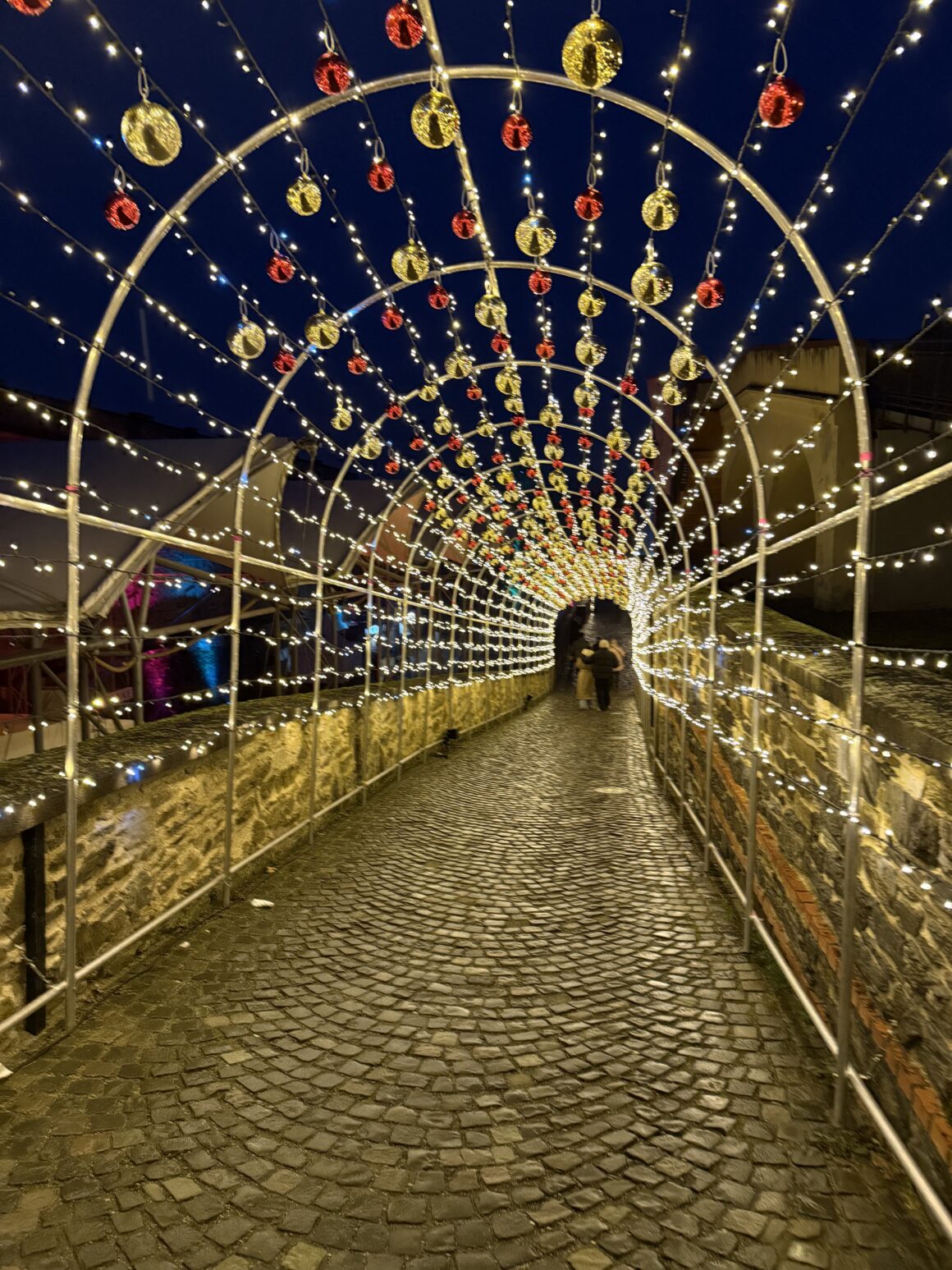
During the Christmas season, Ehrenbreitstein becomes especially atmospheric thanks to the “Christmas Garden”, a light and sound installation that transforms the grounds into an immersive evening experience. This event is one of the seasonal highlights in Koblenz and underscores why the city is remarkable to visit in both summer and winter.
After descending, spend the afternoon along the Rhine or Moselle promenades, or explore quieter neighborhoods beyond the Old Town. Koblenz reveals itself gradually, with small cafés, wine bars, and local shops providing natural pauses throughout the day.
Wine Culture and Local Dining
Koblenz’s wine heritage is not confined to vineyards outside the city. Wine bars and traditional taverns serve regional bottles alongside classic Rhineland dishes. Dining here feels grounded and authentic, with an emphasis on seasonal ingredients and local producers. For wine lovers, evenings in Koblenz offer the chance to taste across regions without ever leaving town.
Why Two Nights in Koblenz Matter
Spending two nights allows Koblenz to unfold at its natural pace. Day-trippers often skim the surface, but staying overnight reveals a quieter, more reflective side of the city, especially in winter, when evenings are calm and atmospheric. Koblenz becomes less of a waypoint and more of a destination in its own right.
Practical Travel Tips
Koblenz is highly walkable, though comfortable shoes are recommended for cobblestones and riverside paths. Public transportation is reliable and easy to use. Winter visitors should dress warmly, particularly for evening events like the Christmas Garden. Credit cards are widely accepted, but carrying some cash is still advisable.
FAQs
Is Koblenz worth visiting for two days?
Yes. Two days allow time to explore the Old Town, rivers, fortress, wine culture, and seasonal events without rushing.
What is the best way to get to Koblenz?
Train travel is the easiest option, with excellent connections from Luxembourg, Frankfurt, Cologne, and other major cities.
Is Koblenz only a summer destination?
Not at all. While summer is beautiful, winter brings Christmas markets, cultural events, and a quieter, more intimate atmosphere.A Koblenz two-day trip is about more than sightseeing, it’s about standing at the crossroads of rivers, wine regions, and history, and allowing the city’s understated depth to leave its mark.