Visiting Pisa: A Journey to the Iconic Leaning Tower
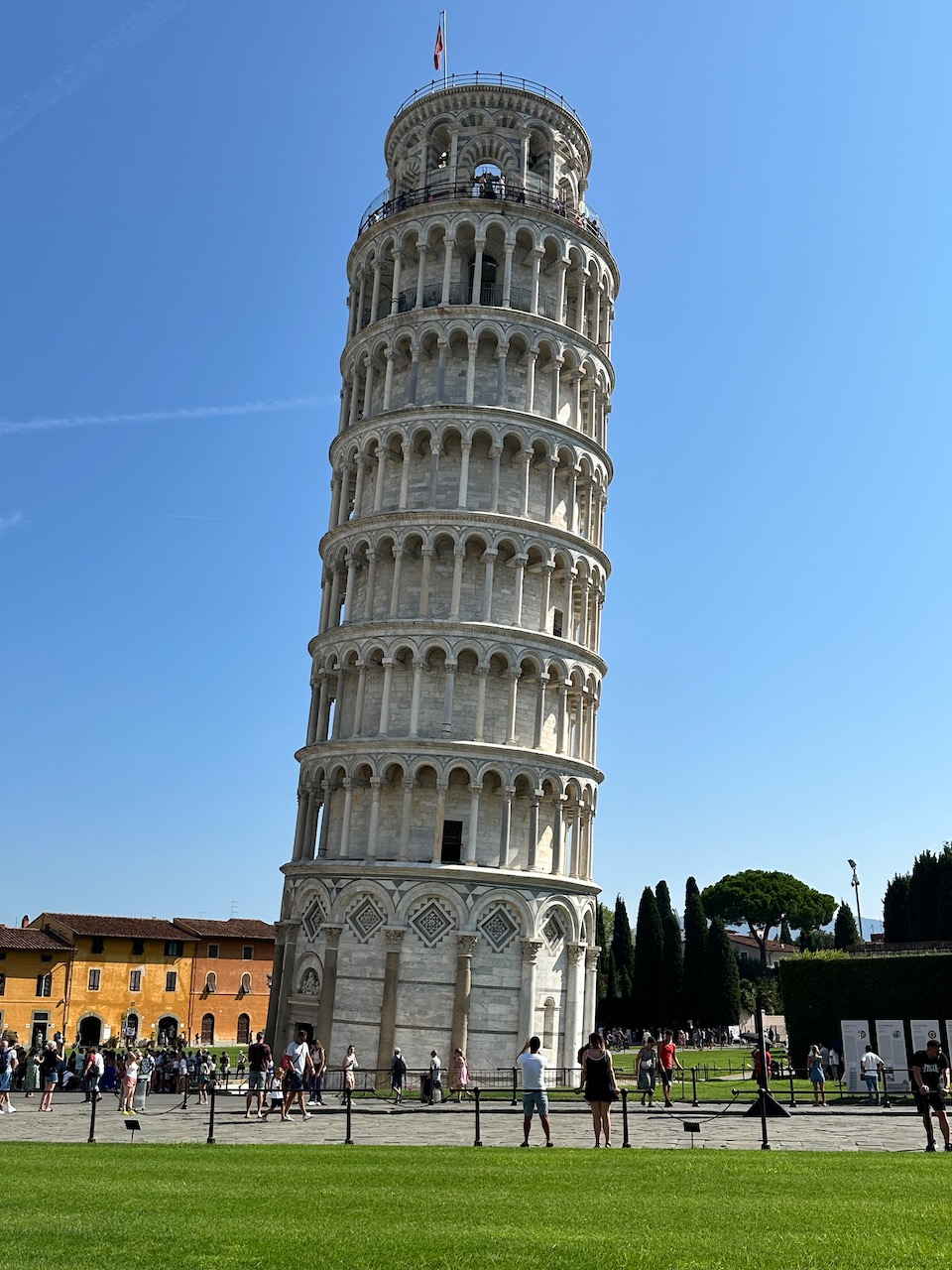
Pisa is one of those places that’s on nearly every person’s bucket list. Taking a day trip to Pisa from Florence was incredibly easy—we hopped on a direct train from Firenze Santa Maria Novella station and arrived in just about an hour. As we stepped off the train, a short walk through the charming streets led us to the Piazza dei Miracoli, and suddenly, there it was—the Leaning Tower of Pisa, leaning far more dramatically in person than we had expected. The tower began to lean once it was completed in 1372 due to the soft ground underneath. The 56-meter white-marble cylinder is the bell tower of the Romanesque, the striped-marble cathedral that rises next to it in the Piazza dei Miracoli.
The history of Pisa stretches back to its days as a powerful maritime republic, and the Piazza dei Miracoli is a testament to its former grandeur. For history buffs Pisa is the birthplace of Galileo Galilei in 1564 and where he became a professor of astronomy.
We were amazed not only by the Leaning Tower but also by the stunning Cathedral of Santa Maria Assunta, with its intricate marble façade and impressive bronze doors. Inside, we admired the stunning mosaics and the famous pulpit by Giovanni Pisano, a masterpiece of medieval sculpture.
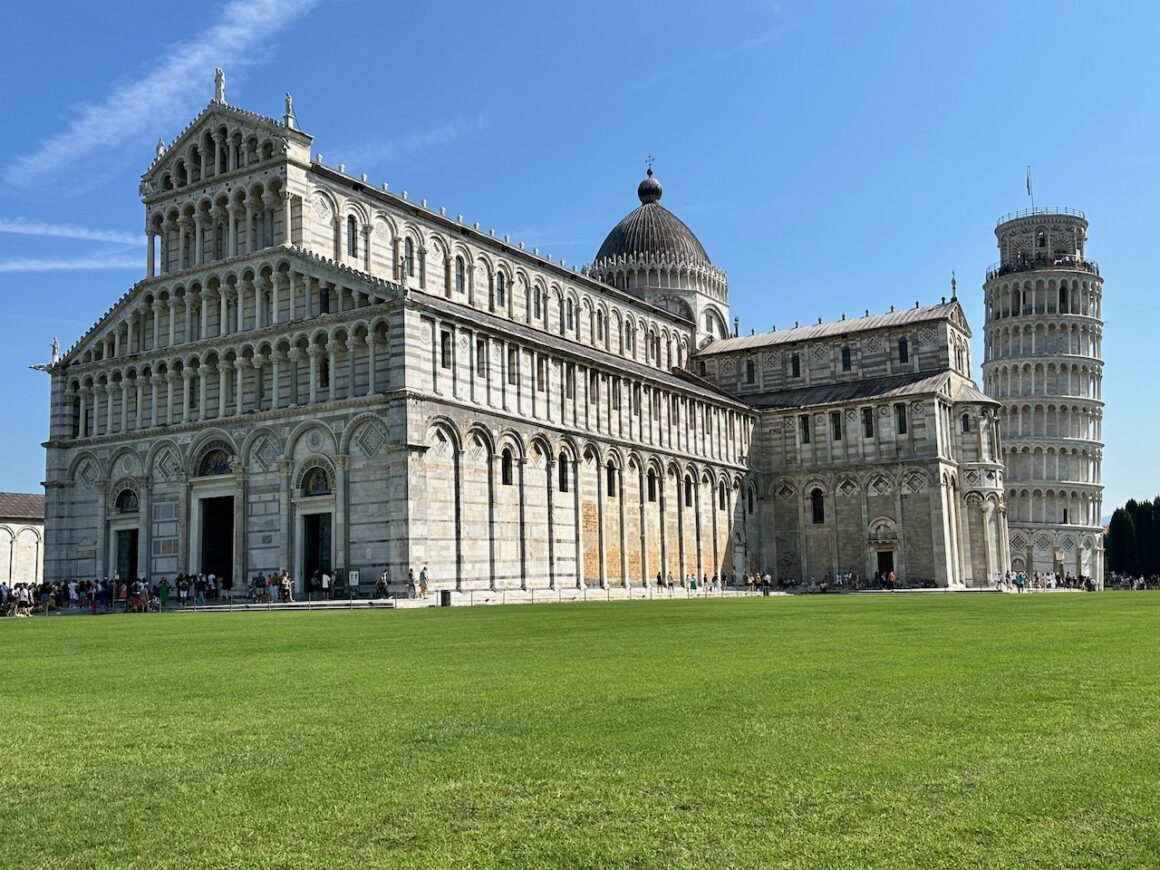
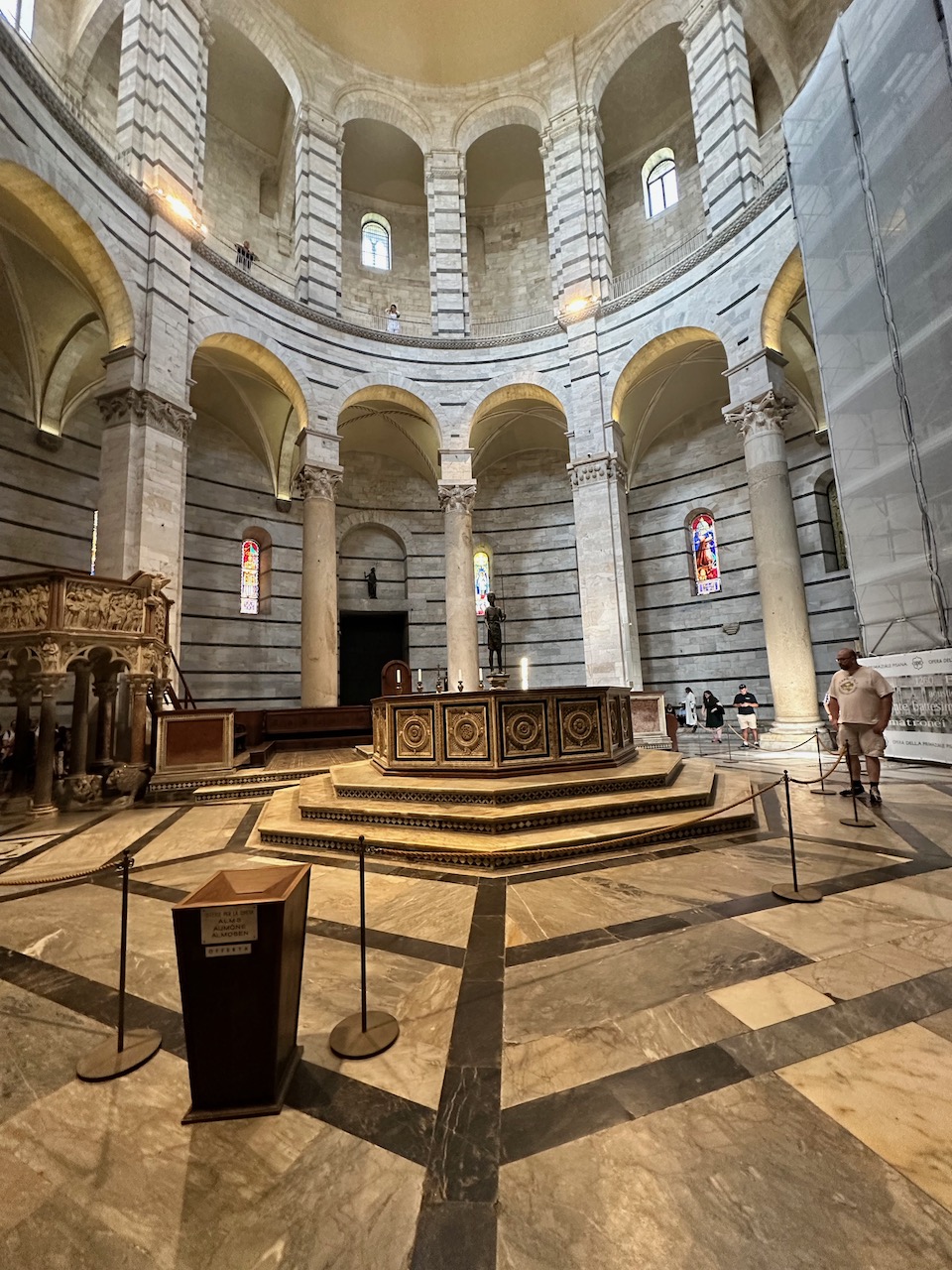
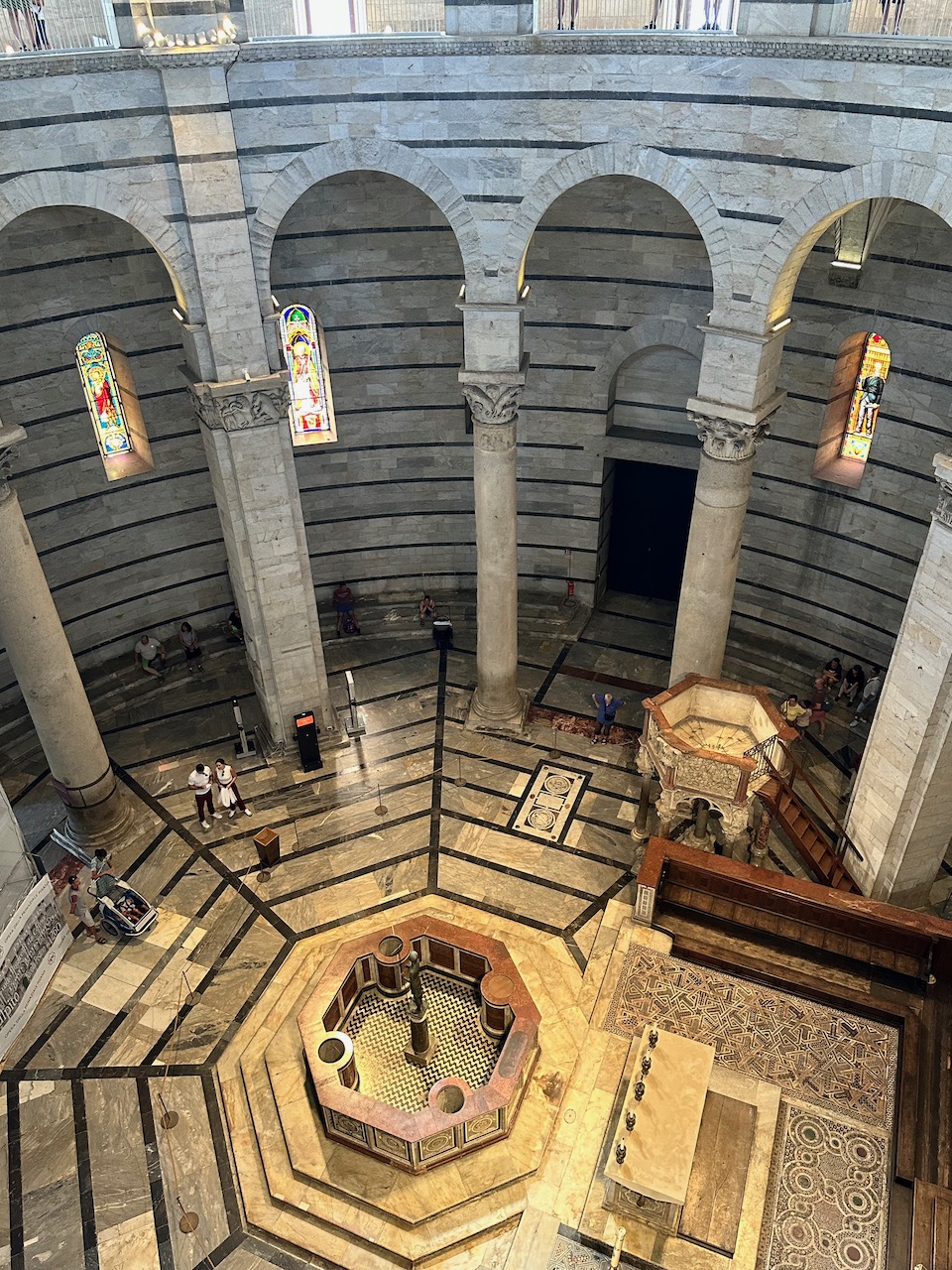
Beside it, the Baptistery of St. John, the round, domed structure next to the cathedral and the largest in Italy, amazed us with its unique acoustics—we were lucky to catch a demonstration of the eerie, echoing sounds that filled the dome.
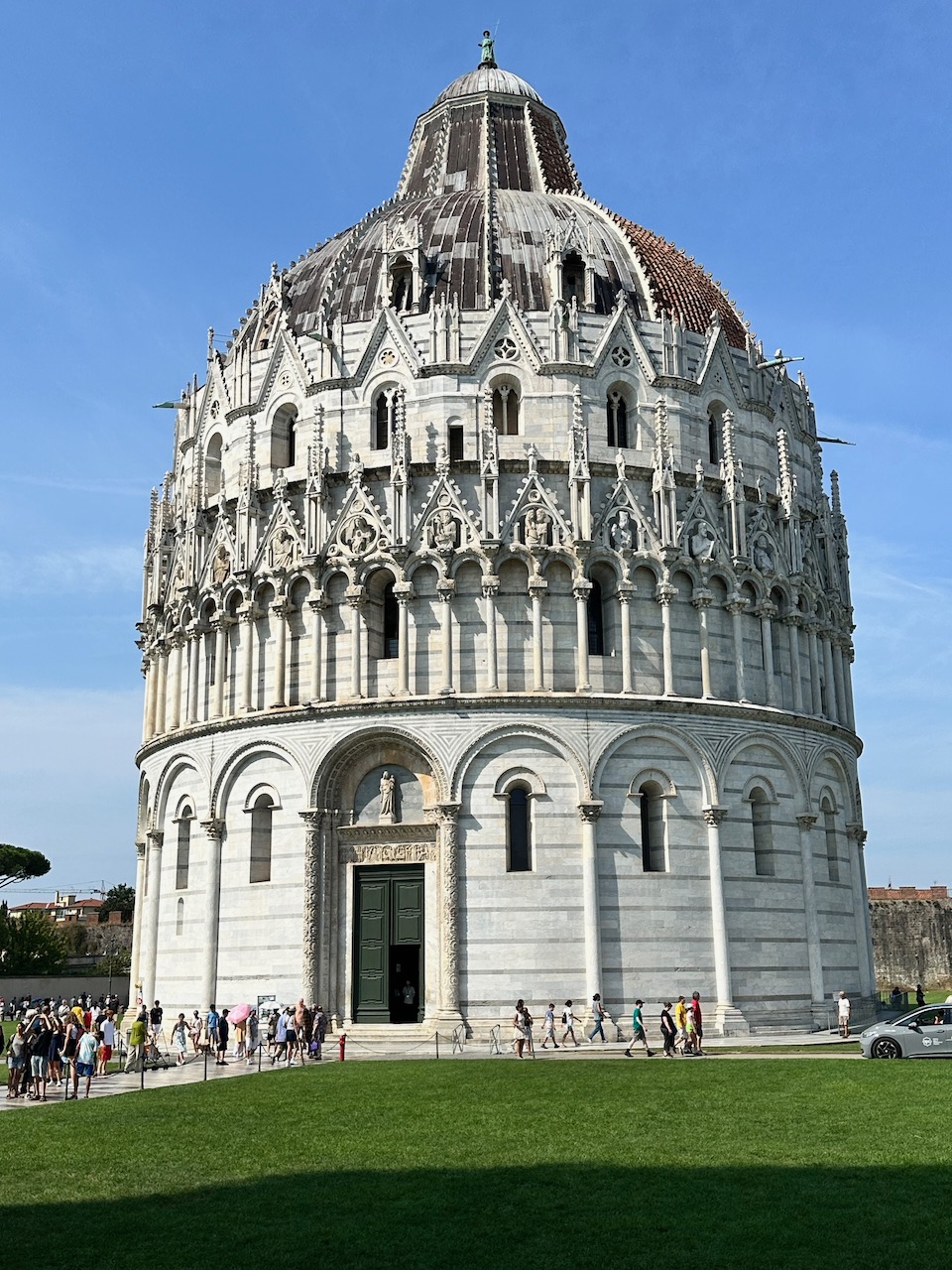
Many visitors choose to climb the Leaning Tower which has been described as itself as an unforgettable experience.
A visit to Pisa can be done comfortably in half a day, making it a perfect side trip. However, if you want to explore more of the town, its charming streets, and the Arno River, you could easily spend a full day here. Whether admiring its historic landmarks, climbing its famous tower, or simply soaking in the vibrant atmosphere, Pisa was a destination that left us in awe of both its beauty and its history.